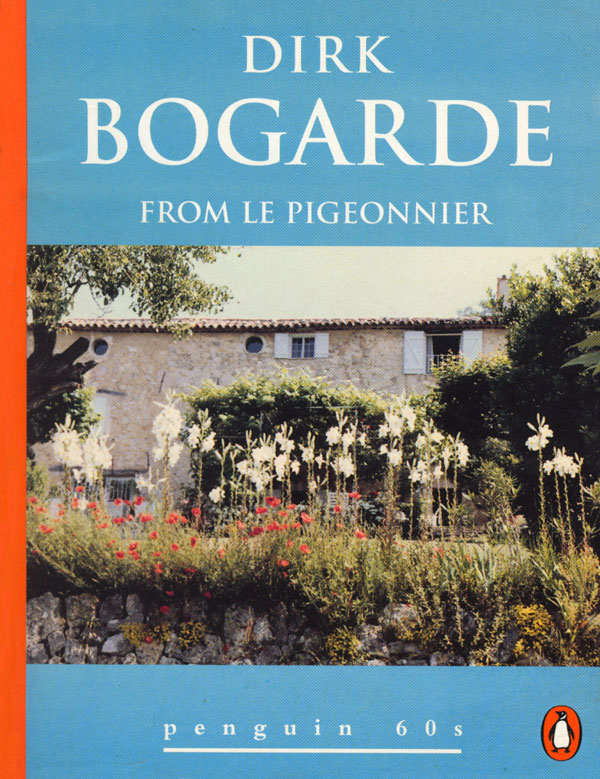
My chunk of France lay almost dead-centre of a triangle
of villages. Well, one proper village, Saint-Cyprien, up
behind my land, Le Pré to the west, and Saint-Sulpice to the
east. Le Pré straggled along the main road: a bar, some
shops, two garages – an Elf and a Shell – a café with a jukebox,
and a modest restaurant which served all right-ish food.
Occasionally. Saint-Sulpice was not much more than a crossroads,
a monument to its liberation by the Americans on
August the 21st, 1944, a row of ageing mulberry trees, a wide
place where the annual fair and circus was held and, along
the road up towards Saint-Cyprien, the olive mill with its
enormous wheel. Above the crossroads, on a modest hillock,
stood the church with its Provençal flat roof, surrounded by
olive trees and cypresses. There were some scattered houses,
a churchyard sliding down the hill, the monuments and
marble angels looking like a tilting chess set, and at the
bottom of all this, neat and trim, the bureau de poste. The
bureau de poste was to play a vastly important part in my life,
although I was unaware of that fact in my early weeks – as
unaware as I was that, just up the road beyond it, glittering
in chrome and plate glass, the Mini-Market, opened in the
week I took up my residency, would almost become my
pivot.
The mayor of Saint-Sulpice, Etienne Ranchett, a fierce…