Hello – Oct 22nd 1988
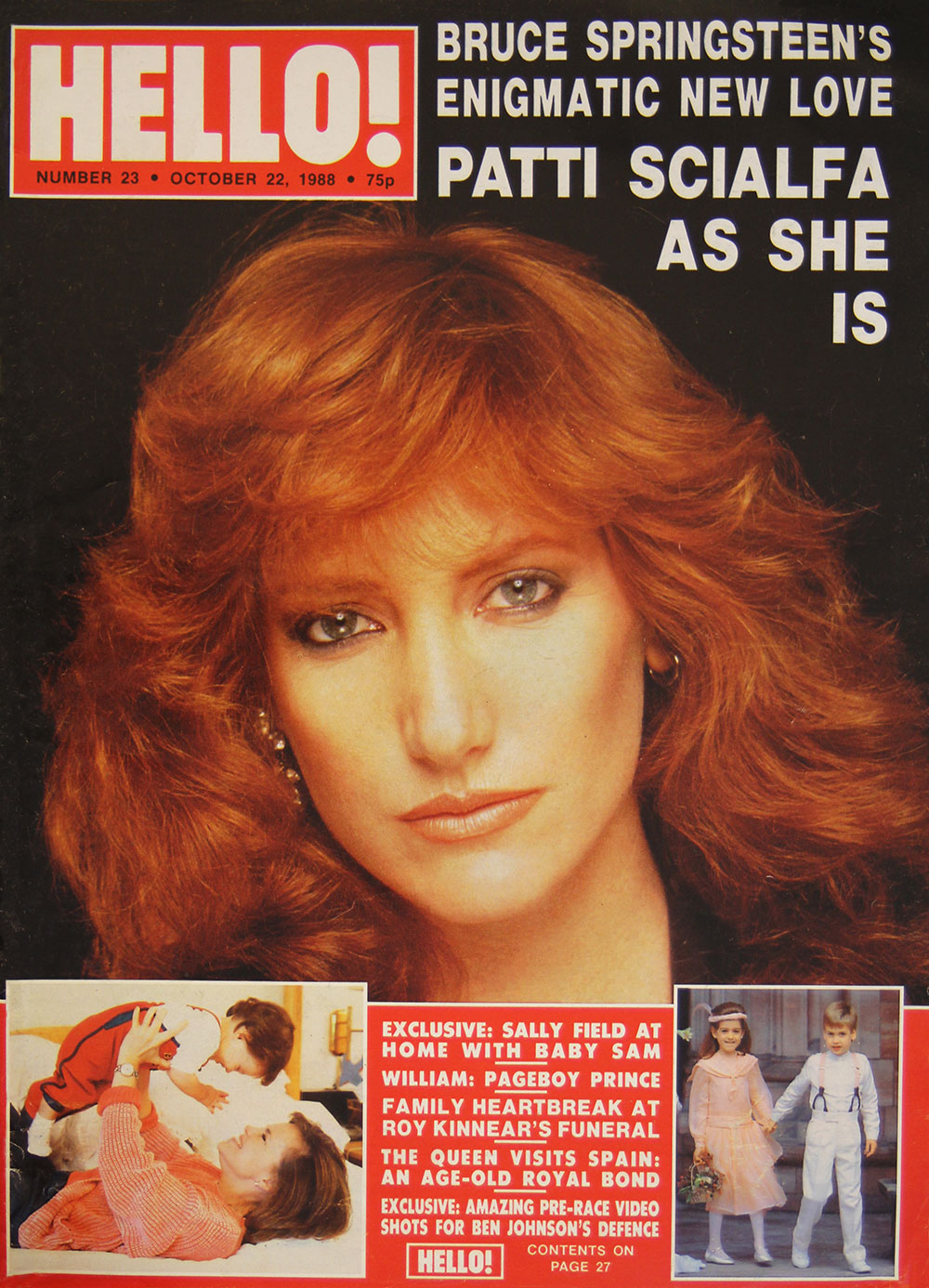


‘I have been very happy on occasion. But not anymore’
We meet that most private of actors DIRK BOGARDE
‘I must be too old, too stupid or too English. But I am terribly prudish. I refuse to reveal my private life’
Dirk Bogarde has known hard times. Before the recent tribute paid to him at the BAFTA awards in London, he talked exclusively to HELLO! There were periods when he felt most black and desperate, when he wanted to be free of the past, from familiar surroundings and from the world he had always been involved with. For many years the archetypal English actor lived in a farmhouse in deepest Provence, before moving to Paris and, last year, to London.
“All I have left now is seven suitcases and my typewriter. I’ve sold absolutely everything else. And as for all my mementoes of the past – photos, family documents, writings- I’ve burnt them all,” Dirk told us.
“When I did Death In Venice, I was a different person. I used to be sociable. I was full of ideas and felt I could conquer the world. All I want now is privacy, I want people to forget about me. But it’s a paradox because every day when I get up I just expect someone to come along and offer me a script. I oscillate between strength, sadness and my passion for making films. I always pretend I’m not interested, but I read every script. I often think, though, that if anyone remembers me it will be as a writer rather than as an actor. I have published seven books so far, the majority being biographies. The worst thing is that my agents complain that I don’t tell enough spicy stories about my cinema colleagues.,
These days many actors and actresses, not -necessarily with much to recommend them, sell their memoirs, capitalising on scandal.
“I must be either too old, too stupid or too English, but I’m terribly prudish. I refuse to tell tales and reveal my private life, or that of people I have worked with. Anyway, so many things have happened in my life, I can scarcely remember the details.”
When you were a child, what did you want to do when you grew up?
“Be a soldier. I loved, and still do, uniforms I think the war years were the best years of my life. I wasn’t fighting, I was drawing pictures.”
What kind of pictures?
“War scenes, battle strategies. I was giving my personal view of the war. My father was a Dutch Art critic who wrote for The Times so I grew up surrounded by works of art. Before the war, I’d worked as a set designer and after the victory of the allies, destiny conspired to make me leave the theatre and begin life in cinema.”
Your screen romances were always with the most interesting and sought-after women of the day, beginning with an adolescent Jean Simmons.
“Jean was playing a young girl who got lost at a fair in Paris in So Long At The Fair. i would have liked to marry her. All the press tried to pair us off, which killed it. You lose spontaneity. The magazines of the day were appalling – they were always putting words into people’s mouths. Jean, as it happened preferred Stewart Granger, who was in hot pursuit of her, and who, I must say, gave me my biggest break in film. Anyway, for over 25 years she has sent me a Christmas greeting” without fall.”
And Brigitte Bardot in Doctor At Sea?
“She was known as a baby, a little girl then, but she still managed to attract every man in sight with those demure little checked skirts and petticoats. She was stimulating to have around, even though, at the time, she was still a nobody.”
In The Angel Wore Red, you played the part of a Spanish priest while Ava Gardner played a woman of the world.
“Ava Gardner was a marvellous actress with a tragic destiny. If I saw myself like her now, lying ill, I’d long to die. I never want to be pitied, and I don’t want anyone to cry for me. Ava was superb. We shot the film in Sicily and that’s where our friendship began. When I held a party to launch the latest volume of my biographies, Ava just turned up Without warning. She was outstanding.”
And Judy Garland?
“She was so, so difficult. I played her ex-husband in I Could Go On Singing – the filming was terrible, so many migraines, so many pills. Judy had a tremendous sense of self-destruction.”
Another of your films helped launch Sarah Miles in her acting career, didn’t it?
“Yes, it was The Servant. I enjoyed that film very much. Along with Visconti and Fassbinder, Joseph Losey was one of my three favourite directors.
It must have been quite hard for a young girl, just starting out in acting, to star with such a screen legend?
“Sarah was very inexpert and difficult. She used to call me ‘Mr Professional’ for my meticulousness. But she did excellently, playing some truly memorable scenes. Also, thanks to that film I found a marvellous house in Royal Avenue, opposite the house rented by the production team for filming. I was very happy there. I have been happy on occasion!,
Luchino Visconti once said that the most fascinating woman in films was Silvana Mangano, who was only overshadowed by Maria Callas. What did you think of her?
“In Death In Venice, my role as a musician turned into that of a writer a role I’ve played four times and which 1 feel comfortable in. Silvana was radiant, all that lace, her long neck … There were never any problems. She’s pure magic. And then there was the Mahler music .. . “
Although you have been unhappy in the past, would you call yourself a happy man now?
“No. How could I be? I had to sell my farm at Chateauneuf de Grasse and move to Paris. I don’t know what I’ll do. I don’t have any family left. I have memories of Christmasses with my parents, my brothers and sisters and my nanny, Lally. So many memories, but I’ve· destroyed them all now. I’ve burnt all my papers.”
Do you regret not having married and not starting your own family?
“During the war I met a wonderful woman and I did want to have children with her. She understood everything, even my obsessive, meticulous side – even one of my autobiographies is called An Orderly Man! But then the war came and … well, we just left it … “

