Illustrated – Jan 22nd 1955
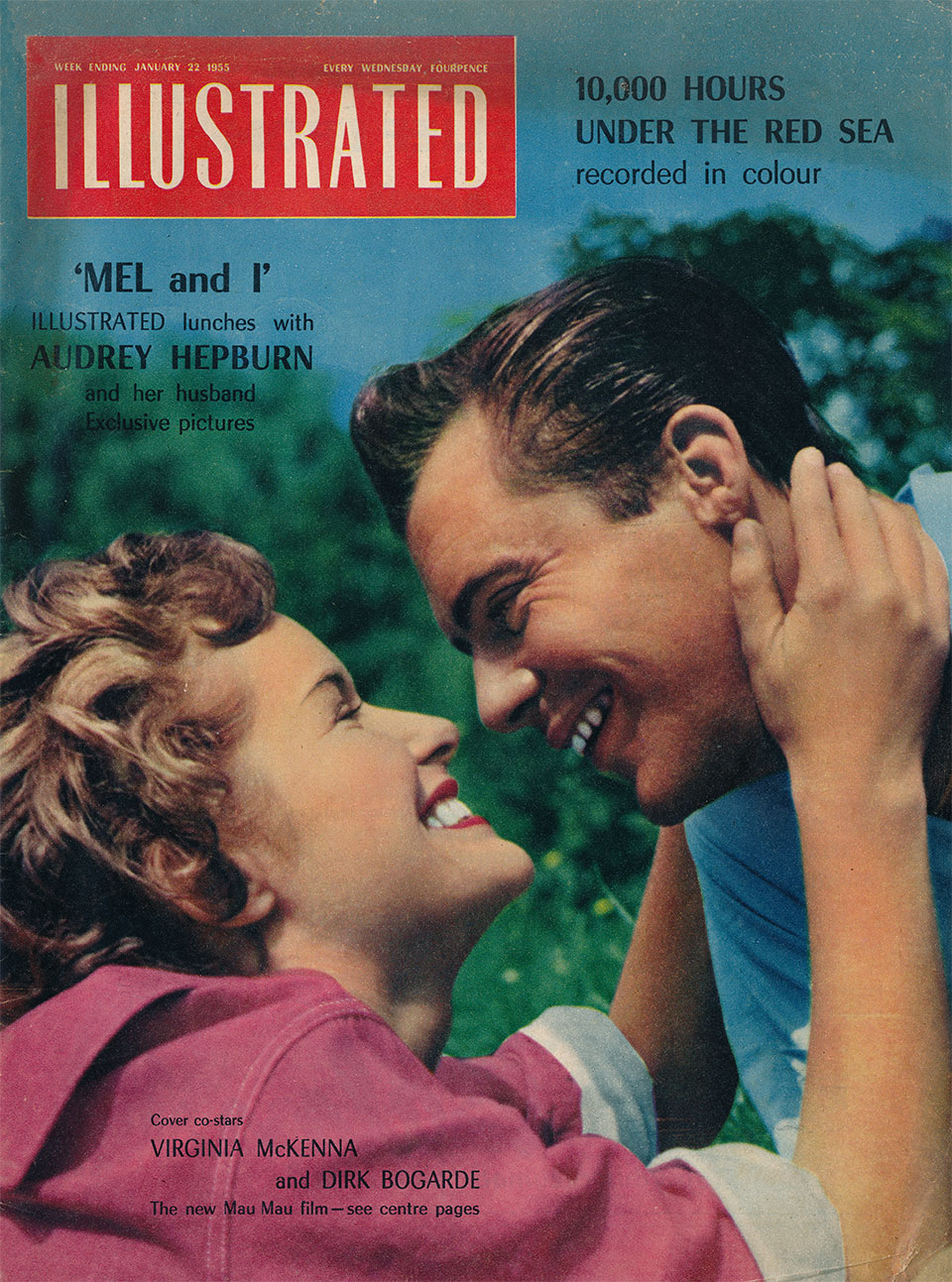


MAU MAU
THE TERROR OF KENYA IS BROUGHT TO THE SCREEN FOR THE FIRST TIME BY A TEAM THAT FILMED WITHIN THE SOUND OF GUNFIRE
WHEN Peter de Sarigny and his crew returned to their hotel twenty miles outside Nairobi, after the first day of filming Simba in Kenya, they were hot and weary. De Sarigny, producer of the film, advised an early night and they turned in, ready for a start at 6 a.m. the following day. Hardly any of them slept.
No sooner were they in bed than a barrage of shots sounded, and those who had been issued with guns made sure they were within reach. “It was the Mau Mau in a skirmish with police,” says de Sarigny. “The shots went on most of the night. By 6 a.m. we were all red-eyed and still very tired, but we managed to get away for the second day’s filming on time.”
The J. Arthur Rank team was in Kenya more than two months. working against time to finish filming before the seasonal rains came, and shuttling backwards and forwards across many hundreds of miles to various locations between Nairobi and Mount Kenya in the north. Their film about Mau Mau was shot authentically against a constant background of terrorist activity. But Simba, which opens in London this week, is not a documentary. It tells the story of a settler (Dirk Bogarde) fresh from Britain who, finding his brother killed, stays to face Mau Mau with the help of a Kenya-born girl (Virginia McKenna). It is a story of hope won out of the tragedy of a country where sympathy is subordinated to action and passion is quick. As a bonus for the Rank Organization’s accountants, de Sarigny has made the film for a third of the money that American producers would have poured into a similar outdoor adventure.
Although the film was shot partly within the sound of gunfire, de Sarigny modestly dismisses the discomforts of the trip. “But I was scared on one occasion,” he admits. “Brian Hurst and I had separated from the rest of the unit and were driving with an African chauffeur through a lonely part of the Nyeri district, sixty miles from Nairobi. Suddenly, our car broke down and our chauffeur, very frightened, began wrestling with the engine.”
De Sarigny drew a revolver that had been lent to him by a police official and nursed it in his lap for twenty minutes until the car was repaired. “Only then,” he says, “did I remember that I’d forgotten the ammunition. The gun was empty.”
CLIFF HOPKINSON

