

One of the first Dirk Bogarde films I saw at the cinema was during a Bogarde season at Glasgow Film Theatre in 2000. He was in the Judy Garland vehicle I Could Go On Singing (1963), and when he appeared on screen I gasped. He’s handsome, but I wasn’t swooning (well, maybe a little) – I was struck by his presence; he barely had to do anything and I was riveted. Born on 28 March 1921, Derek Jules Gaspard Ulric Niven Van den Bogaerde was made for the big screen.
I’ve been an avid Bogarde fan for just over twenty years and I’ve consumed most of his writing, including all seven autobiographies, and have read the John Coldstream biography twice. Despite this, I’m not as interested in Dirk the man as I am in Dirk the actor, which he likely would have found quite pleasing given how private he was, his autobiographies disguising more than they reveal. He talked of his need for armour, for a second skin: “I was rather like a hermit crab. Tight in his borrowed shell. I was safe from predators; and by predators I meant everyone I met.” He was an elusive creature, and as his biographer confirms: “Dirk is a nightmare to pin down.” Remain unpinned, I say. Remain elusive.
Career
During the late forties and early fifties, Bogarde was in danger of being typecast as the shifty criminal before he rocketed to stardom in 1954 at the age of thirty-three playing the straight man Dr Simon Sparrow in the first of four Doctor comedies.
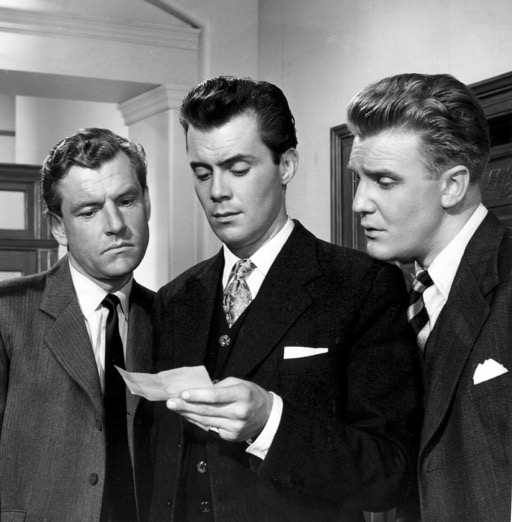
Under contract to Rank, this Idol of the Odeons drew the crowds, reaching a pitch that could rival Beatlemania. Stardom aside, his early career was patchy, and he was rarely given a role with bite, but amidst a few forgettable films there’s some standout performances, including the brooding, tortured murderer and kidnapper in Hunted (1952). Still, critics tended to underestimate him, and it wasn’t until Basil Dearden’s Victim in 1961 that they began to take him seriously, The Evening News declaring: “At last Bogarde becomes a heavyweight.”
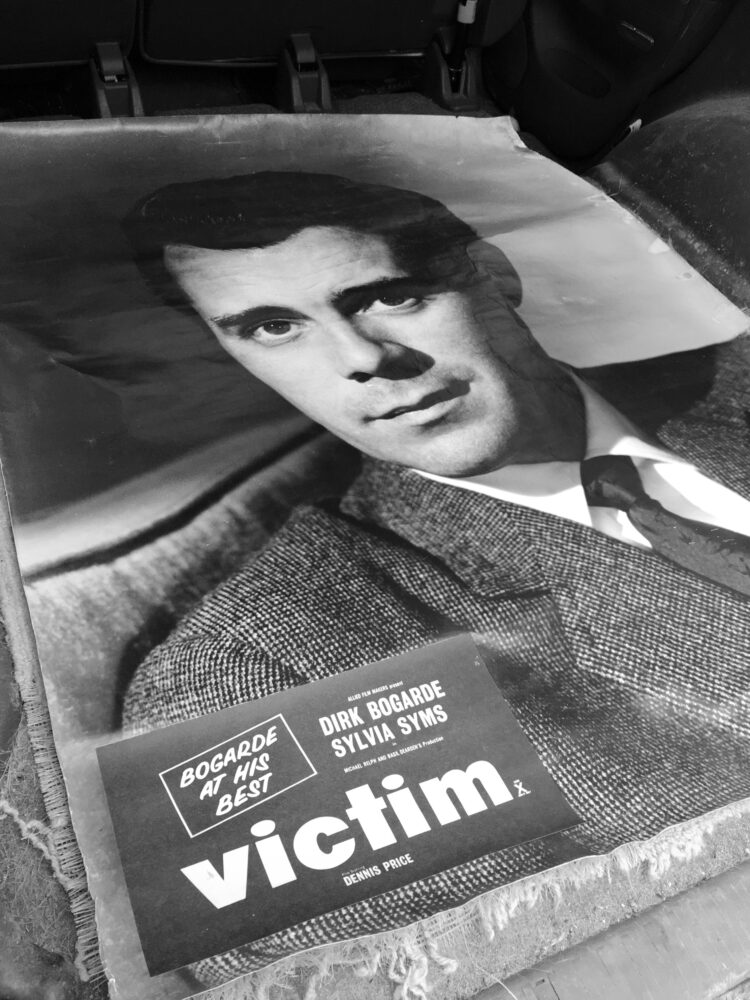
In Victim, Bogarde plays Melville Farr, a married barrister whose love interest, Jack Barrett (Peter McEnery), is targeted by blackmailers taking advantage of British law (homosexuality was a crime for men). When Barrett kills himself, Farr assists the police in bringing the blackmailers to justice, and in the most powerful scene in the film admits to his wife (Sylvia Syms) that he’s gay. In volume two of his autobiography, Snakes and Ladders, Dirk says of Victim: “It was the wisest decision I ever made in my cinematic life.” Which is quite the declaration. It was also a brave role to take on: Dirk was a contradiction – he never came out as gay, and his life partner Anthony Forwood was always referred to as his manager or companion, but a number of his roles had – at the very least – queer undertones, and aspects of his acting were quite deliberately camp. He was hiding in plain sight. Bogarde goes on to say of Victim that “It is extraordinary in this over-permissive age, to believe that this modest film could ever have been considered courageous, daring, or dangerous to make. It was, in its time, all three.” Victim is thought to be partially responsible for a shift in attitudes which helped push through a change in law in 1967 – homosexual activity in England and Wales was no longer illegal as long as it was consensual, in private, and between two men over the age of 21. A welcome change, but not nearly enough, and certainly not equality. Homosexuality was still considered by many as a flaw or mental illness, and Victim sadly reflects this. Still, it was a significant step forward, and a strong role for Bogarde. Despite showing his mettle, Bogarde muddled along in below-par roles until in 1963 he played the title role in Joseph Losey’s The Servant.
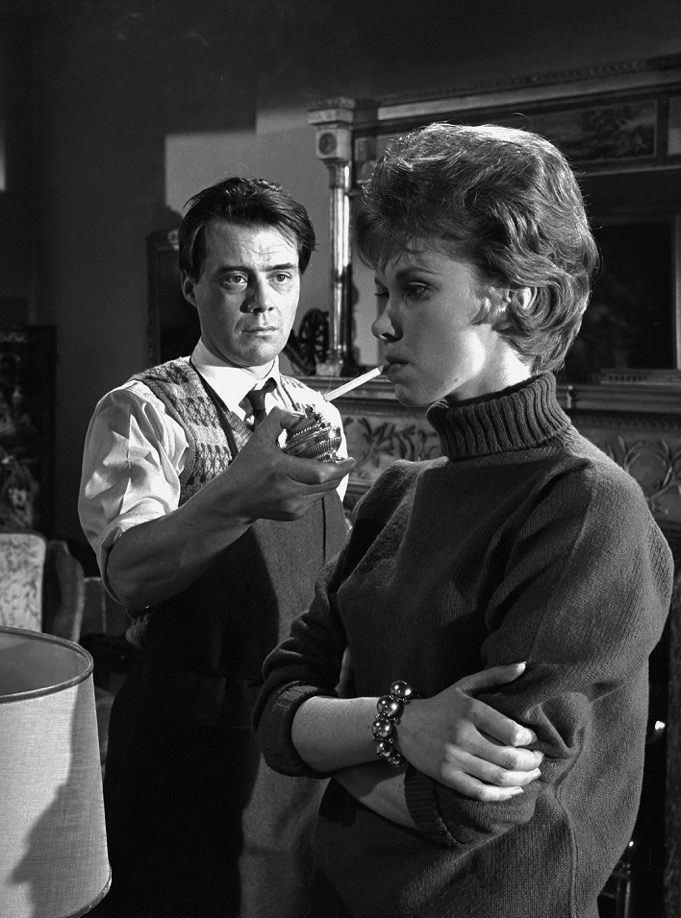
This, perversely, is the same year as his final Doctor film, and I couldn’t think of more diametrically opposed roles; the light, breezy Dr Sparrow is in stark contrast to the malevolent, corrupting Barrett, marking the second major turning point in Bogarde’s career. In the Sunday Express, Thomas Wiseman wrote: “With this performance, the best he has given so far, Mr Bogarde places himself in quite a new category as an actor, and makes himself eligible for a whole new range of parts previously regarded as beyond his range.”
Dirkisms
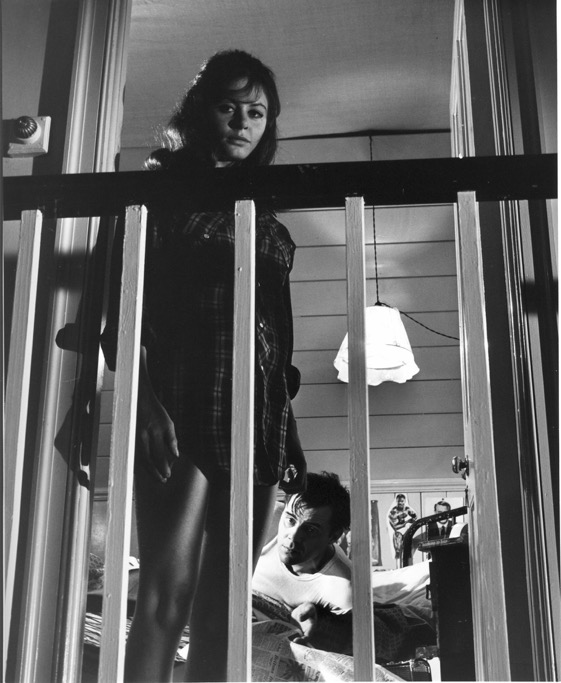
Not everyone has been as appreciative of Bogarde’s acting prowess over the years. Geoffrey Moorhouse offered this barbed appraisal of Bogarde’s performances: “I can enjoy and applaud them as much as most, but I wouldn’t call them acting.” Comparing his work in King and Country (1964) and The Damned (1969) he stated: “There came moments when both raised their right eyebrow, just so, and dilated their nostrils, like that, and looked very levelly at someone they despised because that was another stock Bogarde response.” Pauline Kael in her damning review of The Night Porter (1974) concurred: “We know his neurasthenic tricks – the semaphore eyebrow, the twitching mouth, the sneaky vindictive gleam…”
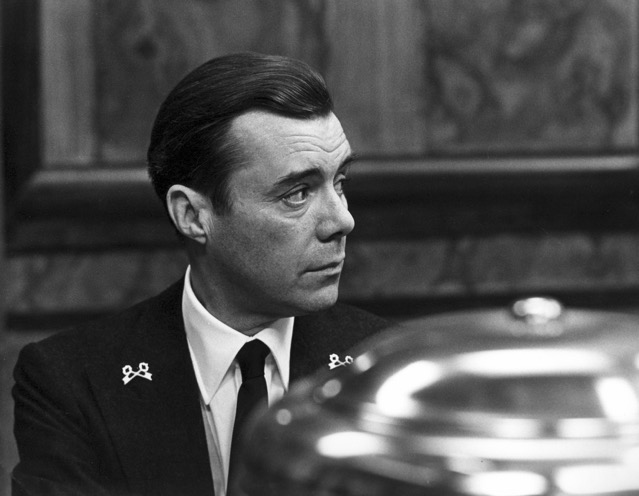
There’s some truth in this; Dirk had his tics, the infamous raised eyebrow being one. At times appropriate and effective, it was often overused. As a fan, I have some affection for these Dirkisms, and tend to be less damning than critics, but dismissing him based on these go-to mannerisms risks underestimating him, overlooking the breathtaking skill he had for quiet subtlety, his ability to somehow convey turbulent emotion beneath a still masque.
Accident
Using this skill in Joseph Losey’s Accident (1967), he made the clichéd midlife crisis of an Oxford professor utterly compelling. Bogarde worked with Losey five times, first on the lightweight but entertaining The Sleeping Tiger (loaded with some pretty suspect pseudo-psychology and clunky dialogue), The Servant, anti-war film King and Country, the flawed but deliciously camp Modesty Blaise (Dirk imprisoned in the desert shouting “Champagne! Champagne!” is a favourite moment), and finally on Accident.
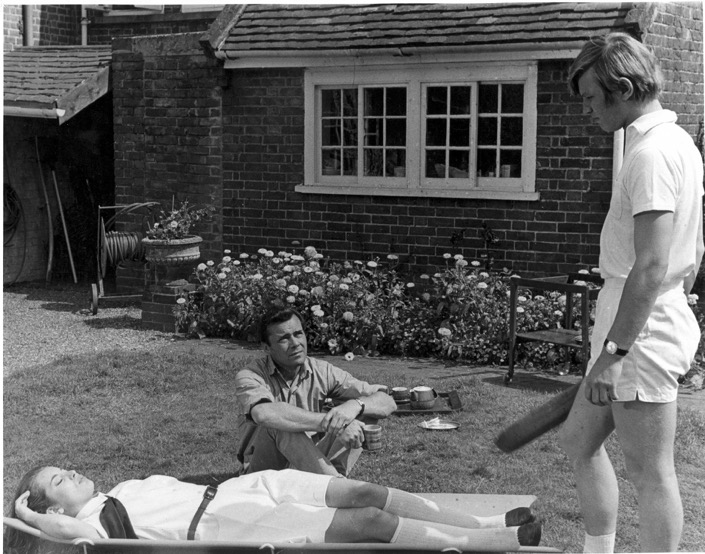
Dream team Bogarde, Losey, and Pinter (who also scripted The Servant) bring us loaded silences and British repression in a male-centred film, where Anna (Jaqueline Sassard), the student all the men lust after, is simply a tabula rasa onto which they project their desires. When Bogarde’s pregnant wife, Rosalind (played by the brilliant Vivien Merchant) learns of an affair Stephen’s colleague is having with Anna she delivers an upbraidment that cuts through their self-absorption: “How pathetic. Poor stupid old man. I’ve never heard of anything so bloody puerile, so banal.” Accident, dangerously, is built around this banality, but succeeds through the artistry of all involved, and the unflinching examination of the rot that lies beneath middle class civility.
Throughout the film, Stephen is largely an observer, his feelings for Anna simmering just beneath the surface. The turning point is when he takes Anna for a walk through the woods and they stop by a field, their hands resting on a fence, inches from each other. We see their backs, Anna gazing out across the field, Stephen in profile, looking at Anna, nervous with indecision. He waits too long; Anna turns and says, “Shall we go back now?”
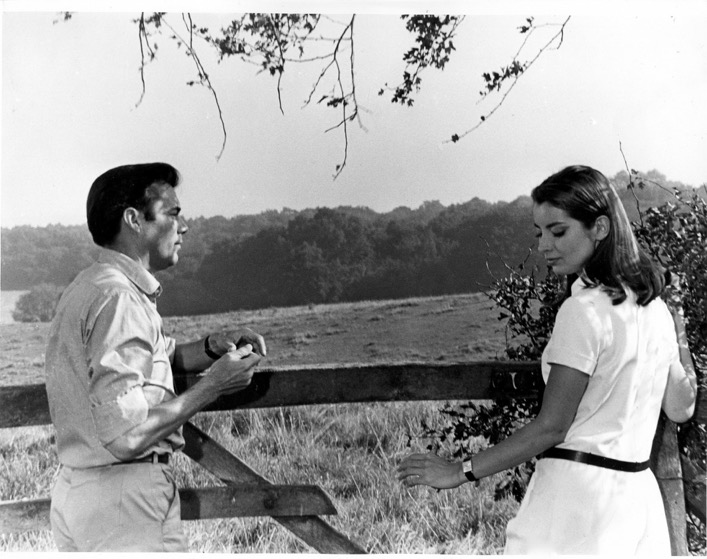
The spell broken, his moment gone. His more brazen colleague, Charley (Stanley Baker), whose success he’s already jealous of, embarks on an affair with Anna, and even while Stephen sees its destructive impact, he’s envious. Just over halfway through, when Stephen finds out about the affair, his buttoned-down British response is to passive-aggressively make an omelette. I’ve watched this scene several times, including without sound. It’s one of my favourite (one-shot) scenes in cinema, Bogarde getting across so much with the line “I’m gonna make an omelette”, his body language and silences, and – always – through his eyes. There’s little sign of any Dirkisms in Accident. In fact, it’s a perfectly understated performance, one of the finest of his career, Bogarde himself describing it as “the most exacting work I had ever had to do on screen.”
While there’s brilliance in the likes of The Servant and Accident, it wasn’t until his later European work that Bogarde truly came into his own (Bertrand Tavernier called him “totally European” ).
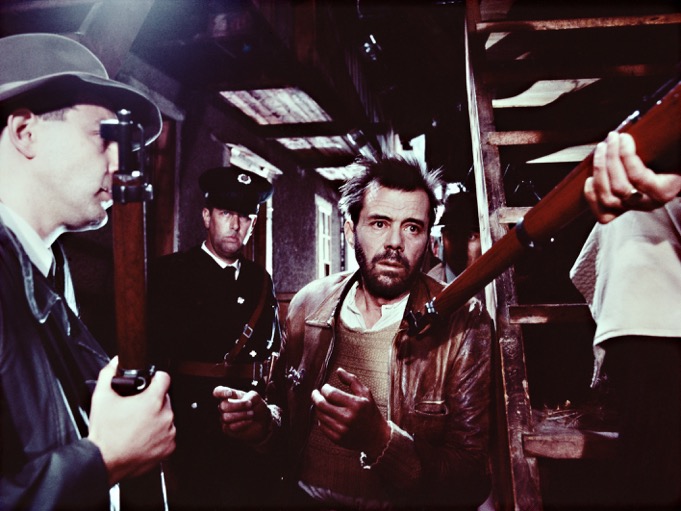
Having failed to conquer Hollywood with Song Without End (1960), and becoming increasingly disenchanted with the British film industry, he uprooted, moved to France, and was embraced by Luchino Visconti, Alain Resnais, Liliana Cavani, and Rainer Werner Fassbinder, taking on roles poles apart from Dr Simon Sparrow.
The Damned
Bogarde first worked with Visconti on The Damned (1969), an operatic exploration of the Nazi rise to power, focussing on the Von Essenbeck family, owners of a steelwork business. Bogarde gives a decent performance as Frederick Bruckmann, a Macbeth-like character who attempts to take control of the family business. It’s a thankless role; he’s clearly playing second fiddle to Helmut Berger, but one hour and forty-six minutes in, Bogarde steals the film by doing what seems like very little. Surprised, I had to pause for a moment, not quite grasping what I’d seen. Rewind. Rewatch. Repeat.
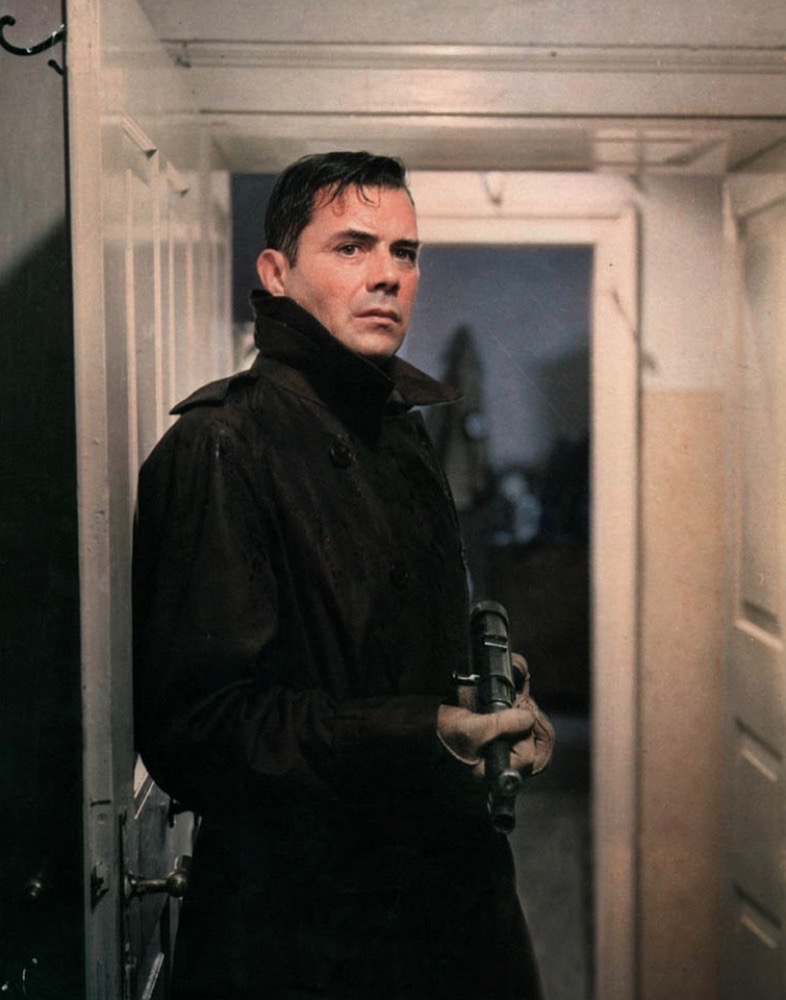
It’s Visconti’s big set piece: the Night of the Long Knives. After a night of revelry and debauchery, we witness the SA being gunned down by the SS. When two men (Konstantin Von Essenbeck and his lover) are shot, Aschenbach, a prominent Nazi, walks in and smiles. The camera pans to Bruckmann standing in the doorway holding a machine gun, closing in on his face. There’s a slight tremble, and he looks up at Aschenbach, tears in his eyes. There’s no tics – no narrowing of the eyes, no raised brow. He’s still for a beat, then trembles again, his mouth opening in horror as he looks back down at the corpse.
Up until this moment, the massacre is distant and mannered: naked and half-clothed bodies are strewn in a tableau with too-bright blood slopped across them, all slaughtered with a cold ease. In a matter of seconds, because of that look on Bogarde’s face, the distance is gone; I suddenly felt complicit in something truly harrowing, as if the rot and guilt of Nazi Germany was permeating my being.
In Dirk’s account of this scene in Snakes and Ladders I was surprised to find it was the first thing he shot, apparently with very little direction or feedback from Visconti. It amused me that such an affecting scene involved Bogarde shooting and then staring in distress at “a large apple crate with an X chalked on it.” It could be he misremembered this because, without a cut, the camera pans straight from the bloody body of Konstantin’s lover to Dirk (though it’s possible Konstantin’s body and Aschenbach weren’t there). Whatever truth there is to this, it will forever be known to me as ‘the apple crate scene.’ It’s only a few seconds in a film that runs at one hundred and fifty minutes, but those seconds alone make me want to declare Bogarde one of the finest actors of his generation. Thankfully, I have more than those seconds to back me up.
Death In Venice
Bogarde worked with Visconti again on Death In Venice (1971). In an interview with Russell Harty in 1986, Bogarde said, “I’ve got a quality. And the quality is what they call charm. And I flog it.” But in his Death In Venice role, there’s no easy charm; he’s an irascible, moody character, and playing an ailing elderly man with shaggy greying hair, a pallid complexion, make-up accentuating the lines on his face and exaggerating the dark circles around his eyes, Bogarde can’t rely on good looks either. It’s all in the eyes.

Gustav von Aschenbach is a composer who has lived by the principles of discipline and order. He is convalescing in Venice when he comes across Tadzio, a boy staying in the same hotel, and is instantly in thrall to this embodiment of ideal beauty. Aschenbach’s strict Apollonian foundations start to crack, and in an effort to restore order he decides to cut his trip short. As the vaporetto transports him to the station, the camera is focussed on him. There isn’t quite the same stillness as Stephen swallowing down his emotions in Accident; even as he sits, hunched, hands on his cane, there’s a twitchiness to Aschenbach, a nervous energy. But we’re drawn to his eyes, where we find both reluctance and resignation; he has pulled away from Tadzio, but order has returned, even if it’s tinged with melancholy. When at the station, Aschenbach uses the excuse of a mix up with his baggage to return to Venice. The halfway point of the film becomes a literal turning point as Aschenbach turns around, heading back to the hotel. On the vaporetto again, it’s a similar scene to only a few moments before, but this time he’s returning to Tadzio, the joy evident in his eyes. To the soaring music of Mahler, he stands, arms outstretched, triumphant. It’s a beautifully choreographed moment.
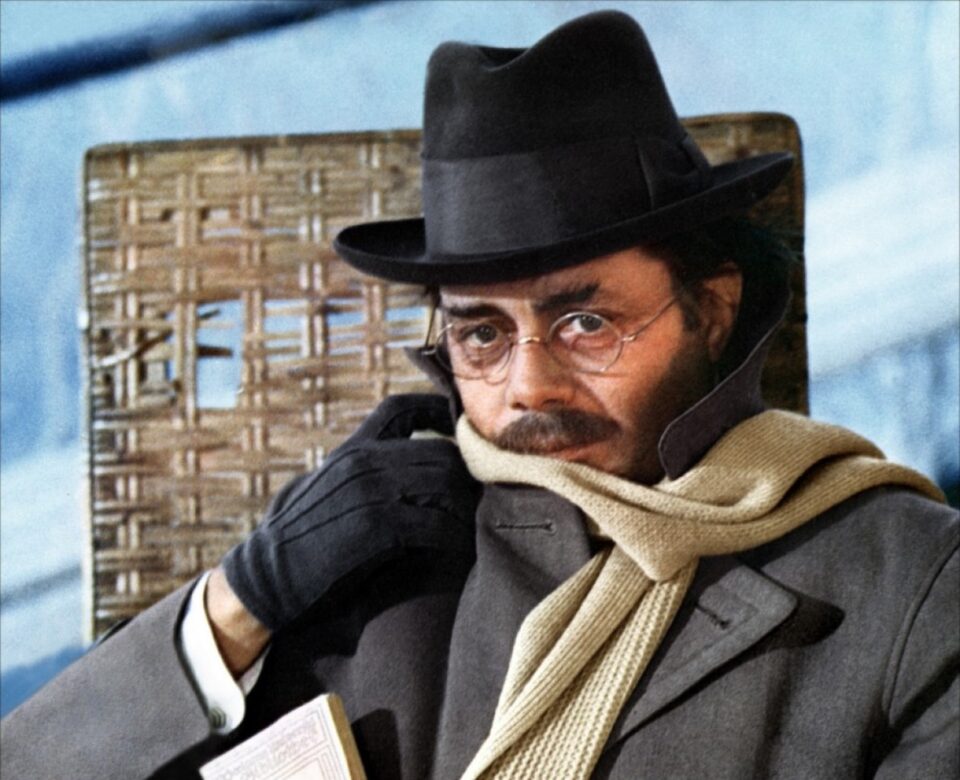
Bogarde gives a masterful, devastating performance while seeming to do very little as he spends the majority of the film sitting, watchful, rarely speaking. Bogarde embodies Aschenbach entirely (frailty, a shuffling and hesitant walk, the nervous energy) but where Aschenbach truly comes through is in his eyes. Visconti said of Bogarde, “I knew I could make a film based on his eyes.” And he did.
The Night Porter
Liliana Cavani’s The Night Porter (1974) features Bogarde as Max, an SS Officer who has a sadomasochistic relationship with one of his prisoners, Lucia (the ever brilliant Charlotte Rampling). The film opens in post-war Vienna, with Max working as a night porter in a hotel. When Lucia arrives with a garrulous crowd, Lucia and Max immediately recognise each other. A silent moment of shock is shared between them before Lucia is whisked away by her oblivious husband. Other than the moment Max sits a few rows behind Lucia at the opera (which could easily be Lucia’s imagination), they don’t meet again until almost an hour into the film, but their awareness of each other’s presence in the hotel disorientates them. They turn in on themselves, caught up in the memories of their relationship in the concentration camp, which we witness through disturbing flashbacks as they both ruminate.
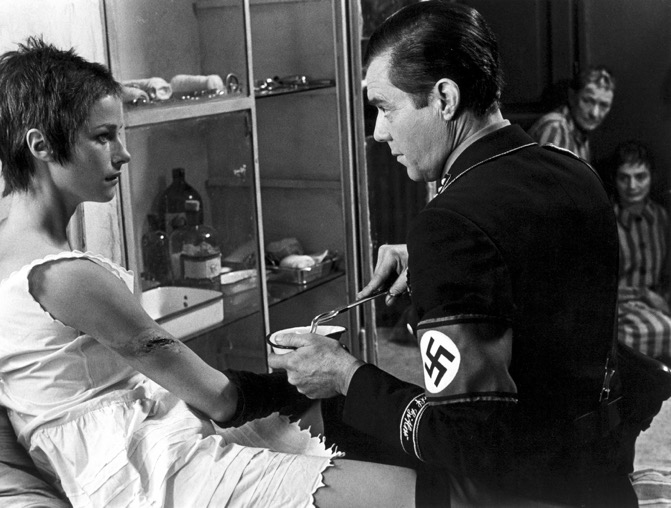
My favourite aspect of The Night Porter are the moments Dirk spends brooding, particularly in the first half (although, there’s a misstep where Max delivers a brief monologue after being reunited with Lucia – it was all obvious, superfluous; simply focussing on a silent Bogarde would have been enough). One particularly mesmeric moment is around ten minutes into the film, when Max turns the reception light off and takes a seat, a small lamp illuminating his face. He sips on his drink and with the glass still held by his mouth he puts his palm across the rim, the side of his hand pressed lightly against his lips. He sits, thinking, conveying so much through stillness.
I can honestly say I could watch hours of Bogarde simply thinking and I lament that such footage doesn’t exist. I will have to make do with the captivating moments of stillness that do, including – in the final film I’ll appraise – a moment so powerful it felt like a gut punch.
Providence
Alain Resnais’ Providence (1977) explores relationships, old age, and death through John Gielgud’s Clive Langham, an ailing cantankerous writer-narrator, as he co-opts his family and moves them around in his own bitter narrative. As personal melodrama unfolds, there’s an underlying unease as the military round people up, depositing them in a sports stadium. Bogarde as Langham’s son, Claude, is camp, acerbic, and hyper-arch as he coldly dissects his wife’s motivations and mocks her attempt at an affair. Claude seems only mildly perturbed by the increasing military encroachments, and his reaction to an elderly man collapsing in the street is that of irritation. In the rare moments he’s not delivering mannered monologues there are glimpses of melancholy, but on the whole, Claude remains unmoved and entirely one-dimensional.
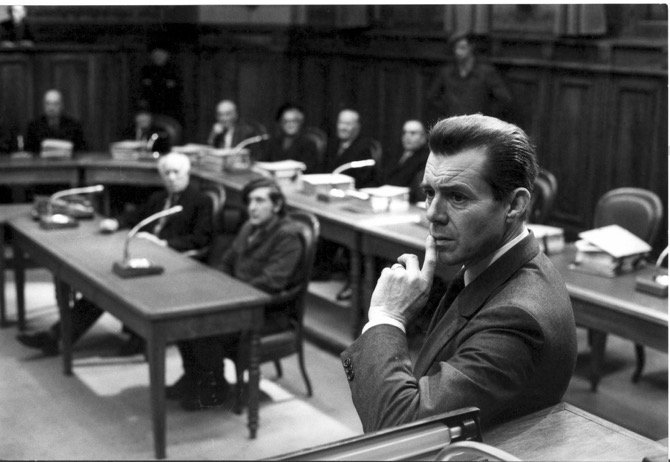
That is, until Clive’s narrative spell is broken when his real-life family gather for his birthday and Claude greets his father with genuine warmth. It seems he’s not the monster Clive had conjured, and the change in demeanour from his father’s waspish avatar to a warm, slightly reserved son is so extreme and so well executed, it’s a shock. I recall gawping at the screen in surprise, watching Dirk do… well, it seemed, not much at all. Sitting in a beautiful garden on a sunny day, wearing a beige cardigan and flower-patterned shirt, he gazes at his father. The sadness in his eyes is unbearable. It hurts. It feels obscene. It’s almost offensive, this unexpected rawness, even more so because of how underplayed it is.

Craft
In an Omnibus interview Dirk stated: “The camera is capable of photographing thought… It’s an internal thing and this is the essence of concentration. And without the absolute tightness of concentration, here, in your head, nothing works on the screen… if you can establish a rapport, a love affair between yourself and the lens they will do everything in their power to help you, but you’ve got to be thinking.” He said this several times in his writing and interviews, and as a non-thespian civilian I admit I thought it was a pretentious and easy soundbite masquerading as craft. Until, that is, I saw Providence. I subsequently re-evaluated his previous work and came to appreciate his skill for stillness, realising he was absolutely right – the camera does photograph thought and he did have that rapport. It was even evident as early on as 1948 (when he was only 27) in the Alien Corn segment of Quartet where, just after he is delivered a life-altering blow, the camera lingers on his impassive face, emotion roiling just beneath the surface. Dirk Bogarde, I realised, was not just a pretty face or a merely decent actor, he was a master craftsman.

References
Bogarde, Dirk (1987), ‘Backcloth’, Penguin, p58
Coldstream, John (2004), ‘Dirk Bogarde: The Authorised Biography’, Weidenfeld and Nicolson, p14
Ibid, p278
Bogarde, Dirk (1988), ‘Snakes and Ladders’, Penguin, p201
Ibid, p201
Coldstream, John (2004), ‘Dirk Bogarde: The Authorised Biography’, Weidenfeld and Nicolson, p297
Ibid, p366
Ibid
Ibid, p380
Bogarde, Dirk (1988), ‘Snakes and Ladders’, Penguin, p246
Coldstream, John (2004), ‘Dirk Bogarde: The Authorised Biography’, Weidenfeld and Nicolson, p507
Bogarde, Dirk (1988), ‘Snakes and Ladders’, Penguin, p263
‘Dirk Bogarde: Above the Title’, 1986: https://www.youtube.com/watch?v=QfeDhkJ-w_8
Coldstream, John (2004), ‘Dirk Bogarde: The Authorised Biography’, Weidenfeld and Nicolson, p360
Omnibus interview in ‘Talking Pictures’ (a look at television appearances made over the years by Dirk Bogarde), 2013

