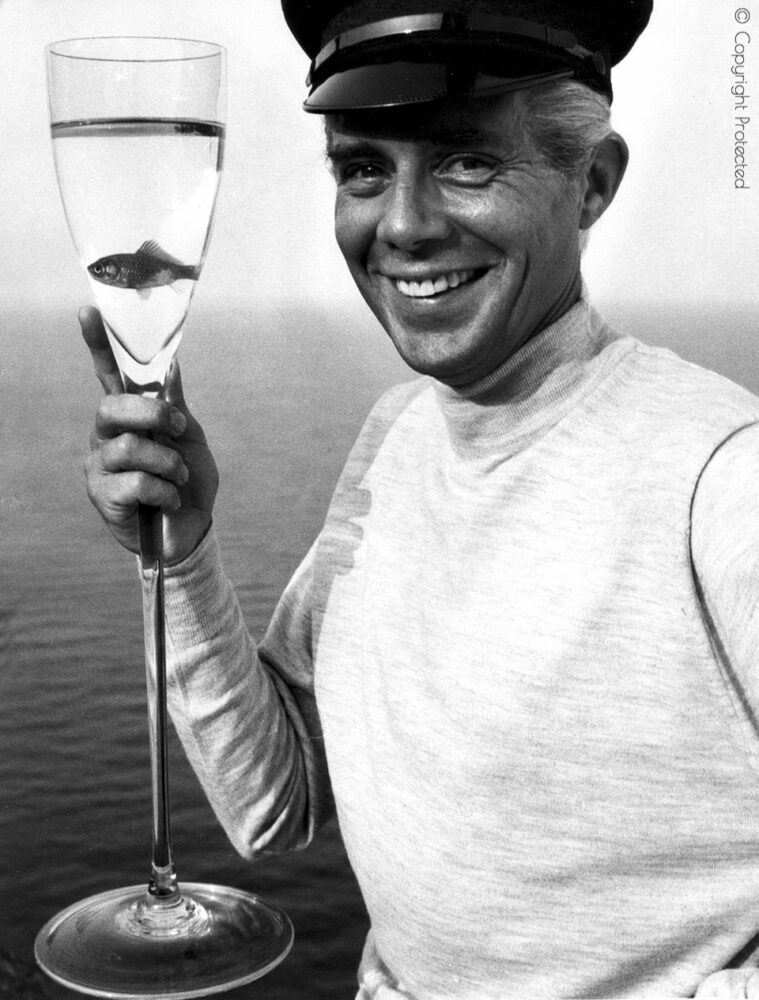
David Benedict on an actor who let his choice of roles do the talking

Independent – Culture Films Features – Sunday 23 October 2011

(BARON / GETTY IMAGES )

Hot Hollywood agent Diane is in crisis: her cute movie star client Mitchell is on the rise, on magazine covers and, to her horror, on the brink of coming out. It’s time for straight-talking. “Are you British? Do you have a knighthood? If not, shut up!”

The laugh that gets in Douglas Carter Beane’s 2006 play The Little Dog Laughed reveals its truth. Take Sir Ian McKellen and Rupert Everett out of the picture and now try naming another out gay male movie star. You can’t? That’s because there aren’t any. None. With secrecy and the fear of discovery still engulfing gay actors in 2011, is it any wonder that the career – and life – of the entirely closeted Dirk Bogarde was a conundrum and a contradiction?

A seriously handsome, bona fide star who had made 35 films by the age of 40, Bogarde was both British and knighted and made more arrestingly bold choices than any actor of his generation, taking name-above-the-title roles in The Servant and Accident with Joseph Losey, Death in Venice and The Damned for Luchino Visconti, The Night Porter for Liliana Cavani, Providence for Alain Resnais and Despair for Rainer Werner Fassbinder. All that from a man who as early as 1958 was the biggest draw at the British box office – pulling bigger audiences than Marlon Brando, Marilyn Monroe, Frank Sinatra, Audrey Hepburn and Elvis Presley.

In addition, by the time of his death, in 1999, he had reinvented himself. He published six novels, plus collections of correspondence and criticism, and, crucially, seven best-selling volumes of memoirs throughout which he staunchly claimed to be straight. Actress Glynis Johns, a contemporary most famous as the suffragette mother in Mary Poppins, tartly observed, “I never believed more than one sentence of what Dirk wrote.” She should know: she was once married to Tony Forwood who had divorced her and subsequently lived with Bogarde as his “manager” for almost 40 years.ADVERTISING

Bogarde’s position was, initially, understandable. Born in 1921, for his first 46 years homosexuality was against the law. Any man caught in “homosexual acts” faced imprisonment. That prohibition was ruthlessly policed. In 1955, 2,504 men were arrested for “homosexual offences”, ie, about seven people every day. Even Ian McKellen, 18 years younger, didn’t come out until 1988, when he was 49. Bogarde never did.

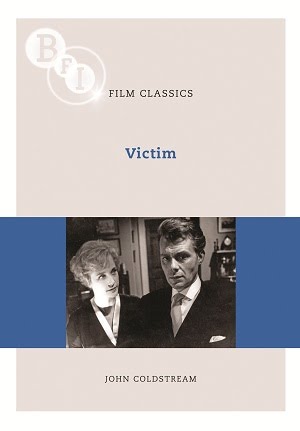
Although fully entitled to privacy, his blanket denials on television, radio and in print post-1967 legalisation became, for me, increasingly hard to stomach. Posthumously, the man behind the painstakingly maintained mask was uncovered in home movies and commentaries from family and friends in a BBC documentary The Private Dirk Bogarde (2001) and John Coldstream’s biography. The great irony of Bogarde’s position, however, is that no other screen actor has given such affecting and extraordinarily powerful gay performances.

Even now, the industry regards playing gay as being potentially career-damaging, an act so “brave” that your Oscar virtually comes with the contract – step forward William Hurt for Kiss of the Spiderwoman (1985), Tom Hanks for Philadelphia (1993), Philip Seymour Hoffman for Capote (2005), Sean Penn for Milk (2008). Probably the only reason Heath Ledger and Jake Gyllenhaal didn’t win for Brokeback Mountain was that their dual presence cancelled one another out.

Regardless of the authenticity – or lack thereof – of those performances by straight actors, they pale beside the still astonishing impact of Bogarde’s shockingly truthful performance back in 1961 as a barrister embroiled in a secret gay affair in Victim.

Bogarde plays married barrister Melville Farr who discovers that a blackmailed young man who loved him has hanged himself in police custody rather than reveal their relationship. Realising Farr’s intention to uncover the plot, the blackmailers threaten to expose him. In the central scene – whose dialogue was rewritten to more explicit effect by Bogarde himself – Farr is confronted by his distressed wife (played by Sylvia Syms).

Shot in high-contrast black-and-white, edged with the darkness of a sitting-room at night but trapped in a fierce spotlight, Bogarde is mesmerising. Crisply suited, dry-voiced and on the edge of tears, he painfully stifles the emotion threatening to destroy him. With the camera locked in close-up, he lifts his chin ever so slightly in defiance, his eyes widening into a glare of triumph that costs him everything.

“You won’t be content until I tell you, will you, until you’ve ripped it out of me. I stopped seeing him because I wanted him. Can you understand – because I WANTED him.”

I can still remember being transfixed – and terrified – by that moment when I first saw it by accident on television one night. It was the 1970s, I was a guilt-ridden, fiercely closeted teenager and I had never, ever seen or heard a man on screen or off express such piercing desire for another man. I felt physically torn between an absolute need to keep watching and the cramping fear that my parents would come in and instantly understand why I was watching something so incriminating.

Bogarde always maintained that the camera photographed thought. Nowhere is that more true than in that scene. It wasn’t just this teenager who recognised the staggering truth behind that performance and its implications for the actor.

In a television interview to promote the film, he was asked the not-so-veiled question: “You must feel very strongly about this subject to risk losing possibly a large part of your audience by appearing in such a bitterly controversial film?”

With manufactured insouciance, Bogarde counters, “I don’t think so, no. This is a marvellous part and in a film I think is tremendously important because it doesn’t pull any punches: it’s quite honest. I don’t have to use any old tricks for the fans, it’s a straightforward character performance.”

Necessarily disingenuous as that was, in hindsight it’s also seriously unconvincing due to his immensely camp “who me?” manner, his left eyebrow arched, his fingers playing with his ear and chin.

Being able to pinpoint a scene that changed a career is rare, but that’s what that Victim scene did. And having just engineered his release from his constraining 14-year-old contract with the Rank Organisation, Bogarde accelerated to an international reputation taking on increasingly complex roles with adventurous directors. Contrarily, the finest of those performances were in roles amplifying his hidden sexuality.

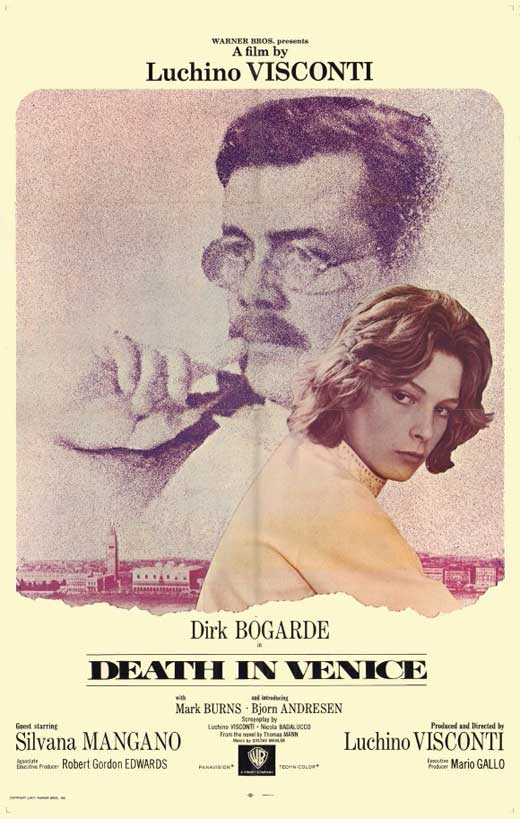
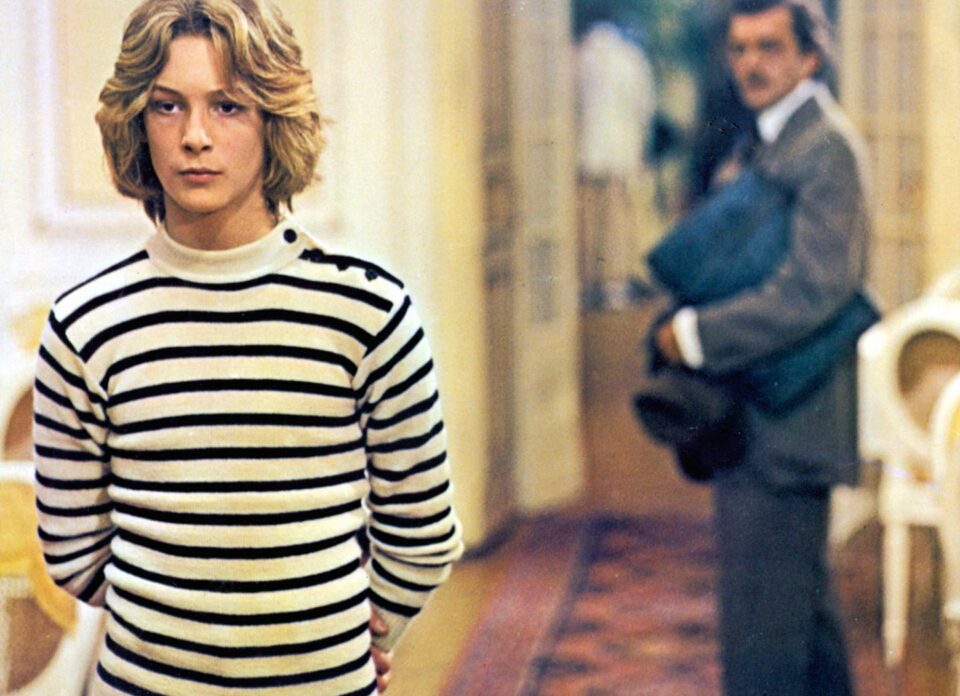
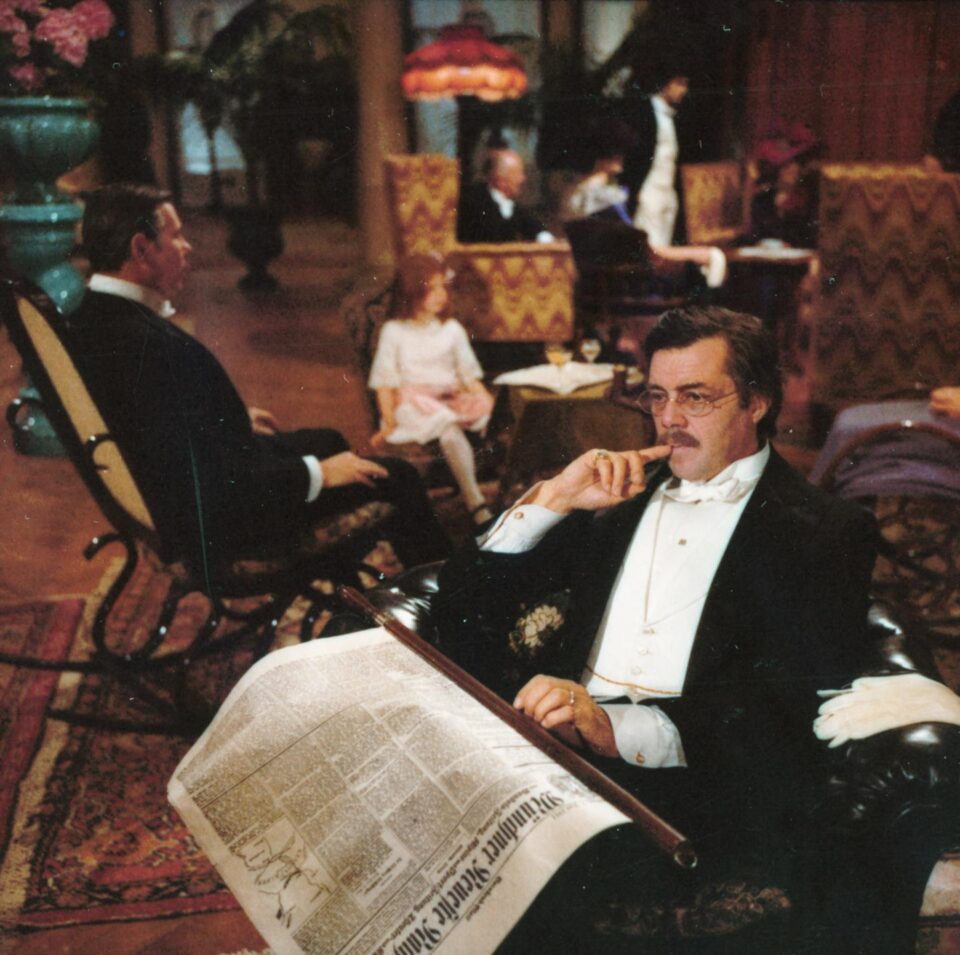
He was memorably viscous as the vicious Barrett, the manservant manipulating imperilled, upper-class James Fox into sex-and-power games in Losey’s superbly elliptical (and Pinter-scripted) The Servant. And, in 1971, he crowned his career with Death in Venice, playing a man who falls fatally in love with the ideal of beauty exemplified by a beautiful boy. With almost no dialogue, the film amounts to a 125-minute reaction shot. As casting director Michelle Guish observed of Helen Mirren the day after the first Prime Suspect aired, no other British actor could have played that role that well because no one else had that depth of screen experience.

Was it arrogance that pushed the controlled Bogarde to the brink of self-exposure in this and other defining roles? He destroyed almost all of his personal papers, so we’ll never know. Whatever conclusion we try to draw, the screen evidence survives.

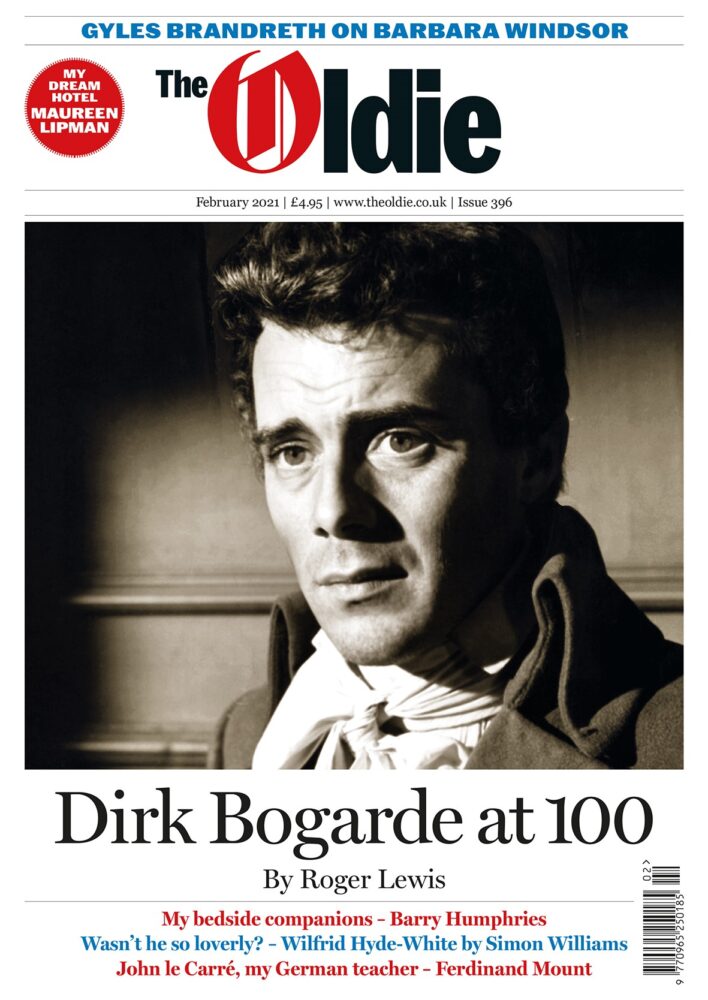
A feature celebrating the centenary of Dirk Bogarde, including an interview with his biographer, John Coldstream. All a part of the March 2021 podcast for Chichester Cinema at New Park. 

https://open.spotify.com/episode/2EBgXxWFuCzWiHgZBTVcS3?si=zeUz0t2NR5aobdcJbHYsvw

Fittingly, 2021 is not only the centenary of Dirk Bogarde’s birth but also the 60th anniversary of Victim and the 50th of Death in Venice. There is much to look forward to as we approach 28th March.

Sight & Sound

To celebrate the 50th anniversary of Luchino Visconti’s adaptation of Thomas Mann’s Death in Venice, we republish this report from our Autumn 1970 issue in which Margaret Hinxman visits the film’s set and talks to its star Dirk Bogarde.

26 February 2021

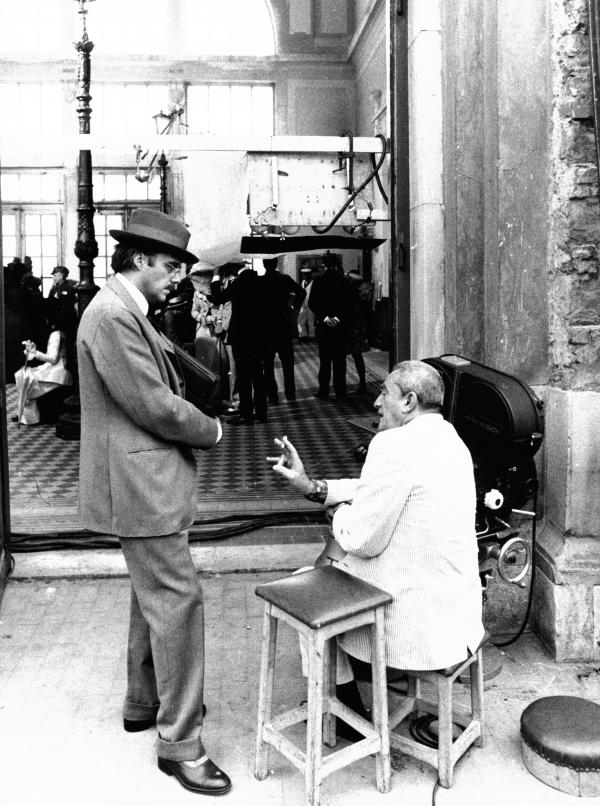
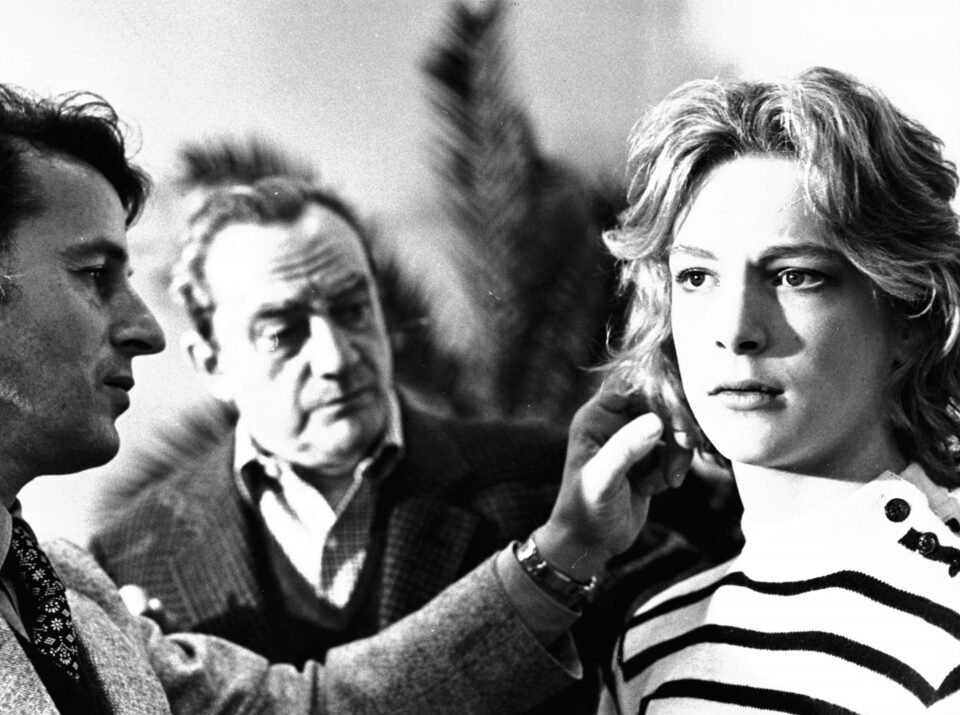
Dirk Bogarde calculated that he had reached his 243rd ‘look’ and the end of his tether. Almost. Working for Luchino Visconti on Thomas Mann’s Death in Venice was an experience, alternately exalting and exasperating. Visconti – Duke of Modrone and descendant of Charlemagne – is the absolute monarch, tyrant and charmer, hawk and dove.

The camera and consequently Visconti seemed pleased with the “looks”, thought Bogarde, relieved. “Three months from now I shall know it has been marvellously worthwhile. But just at present it is too tender to contemplate. Like going to the dentist and having all your bridgework done in one go.”

He considered Visconti – “V”, the “monster or the “master”, depending on the prevailing wind – was not unlike Losey, in the way each composed their films in many-layered depth. Also there was the total application to the needs of the production, which placed punishing demands on those who have to supply the needs. “Though Losey is more professional, more aware of working within the film industry set-up. Visconti is a brilliant amateur in the best, truest sense. Very aristocratic, very rich, very talented – the coincidence of all three has conditioned how he works.”

We were in Trieste on the tag-end of the marathon which had begun at the Hotel des Bains on the Lido, where Mann set his story; moved into Venice, a nervous nose ahead of the tourist season; and fetched up at Cinecitta in Rome. A decaying railway terminal at Trieste had been found to substitute for the station (circa 1911) at Venice, which had inconsiderately modernised itself. The location scouts were off in the hills talent-spotting good-looking graveyards. That would be it. Tempers had stopped fraying. The End was in sight.

The day before shooting at the station was a holiday, which meant that everyone went around with a twitch of conscience for being so idle, although Visconti himself had decreed it. No one felt quite content until he arrived from Venice with his entourage, a new crewcut and a brave, checkered umbrella that did duty for a sunshade.

One can see why his crew drop everything to work with him when he calls; why his rages, which can immobilise a set and everyone on it, are instantly forgiven and forgotten. He gives his unit from the star down an exhilarating sense of pride. “These days he is a lamb,” says Piero Tosi, the costume designer who has been with him since Senso, “then he was a tiger.

At dinner that night Visconti was expansive and happy. All was well. Bogarde was a loved son. He led his film ‘family’ into the tough little Trieste restaurant where the food had to be superb and traditional and the staff buzzed around him, not deferentially, but like respectful accomplices in an elaborate conspiracy. He was an immaculate host. One must try the special bean soup, the local cheese, the private wine.

Characteristically, he had spent the afternoon at the castle of the Hapsburg Archduke Maximilian and his wife Carlotta at Miramare. Just looking and feeling and absorbing the atmosphere. Someone suggested, not entirely in jest, that he had probably lugged the unit out to Trieste just to have an excuse for visiting Miramare. He thinks the real Hapsburg story would make a splendid film: the others had been “fairy tales”. Romantically wrong.

The prospect of Nicholas and Alexandra intrigued him: “but you can only make it in Leningrad, nowhere else.” He finds the critics tiresome at times. “They will always connect each of my films with all the others – the link – the family. Particularly the Americans do this. I don’t see the point. A compliment? Maybe. But I could wish they would pay me a greater compliment. To judge each film as it comes.”

“What is past is past,” he says with the urgency of a man whose next film – a Proust adaptation – may be his last. “I see only the faults in my old films. The other day I saw La Terra Trema. I thought the audience would walk out. How can they stand it? Though I wish very much I could have completed it in the three episodes I planned instead of just one. Oh yes. But the time is past. The time for La Terra Trema is past.”

Death in Venice, like all his film projects, has been maturing in his mind for many years. But the plans for actually making it crystallised during The Damned. Bogarde’s first indication of it was when he told Visconti he would rather be the character named Aschenbach (played by Helmut Griem) instead of Friedrich Bruckmann – the ‘Macbeth’ of The Damned – which many critics now agree was a monumental piece of miscasting. Visconti was adamant that he should be Friedrich, adding, according to Bogarde, “but you may play Aschenbach in my next film, Death in Venice.”

He later justified his choice of Bogarde to the baffled front office at Warner Brothers by explaining that, “Bogarde is like a dead pheasant, which you hang from the neck and when the head falls the body is ripe. Bogarde is exactly ripe for this role.” Bogarde related the story with some relish. Later on the set, when Visconti remarked that he was looking a trifle “old”, he retorted that you could hardly expect anything else from a dead pheasant.

The front office, apparently, was also concerned about the theme of Mann’s novella. Anyone who had merely read a synopsis instead of the original might reasonably suppose that the film would be simply about an elderly man who chases a young boy and then dies. “It is not about homosexuality,” Visconti insisted. All the same, it was thought, why not change the boy to a girl: instead of a lecherous old man pursuing a little boy, a lecherous old man pursuing a little girl. Reason, it appears, prevailed.

It is easy to see why the book should be such a coveted film property. It has the formidable pure classic line that challenges a director’s skill and vision. If he fails to measure up, he can expect no mercy. Conscious perhaps of his own failure with Camus’s L’Etranger, Visconti started the film as some kind of sacred mission. “If it is no good, neither of us can work in the cinema again,” he assured Bogarde. Somewhat extravagantly, considering he is now planning the Proust film.

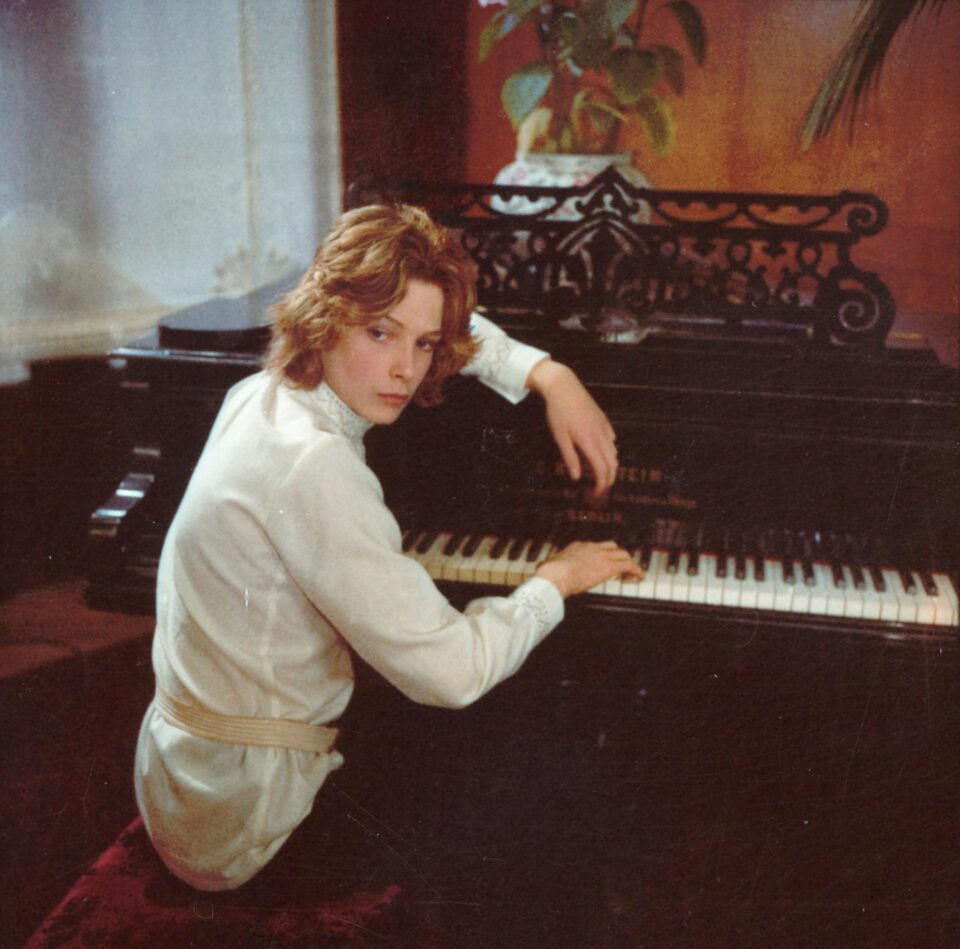
To emphasise what he feels is the essence of the story, he has introduced a dialogue between Schonberg and Gustav Mahler – upon whom Mann based the character of Aschenbach – taken from letters they exchanged which discuss the nature of perfect beauty. Mahler-Aschenbach believes beauty is created by the artist and is disproved when he discovers perfect natural beauty in the Polish boy Tadzio.

Visconti, however, has little respect for the cadence of dialogue – strangely for an artist whose reputation as a musician and producer of opera would suggest a hypersensitive feeling for the rhythm of sound. He seems to share an impatience with mere words with Hitchcock and Ford, whom James Stewart recalls ripping out entire pages of dialogue no matter how relevant just because the chat slowed up the visuals.

The script of Death in Venice, which he has written with Nicola Badalucco, is a pictorial poem. The lighting cameraman Pasquale De Santis has washed the film in those pale mists of Venice in which mirages take shape. There were problems at first. ‘Mahler’ had to become ‘Thomas Mann’, though Bogarde’s fears that he might materialise as “Mr. Chips” or “Rudyard Kipling” were fortunately unfounded.

The specially constructed Mahler nose makeup had a distressing habit of blowing up in the heat. Oddly, Visconti, who can hold up a morning’s shooting arranging the precise fold of an extra’s veil which may just get into shot but probably won’t, was less perturbed than Bogarde, who for the past three months had been thinking in terms of Mahler, since the memorable night in Rome before production started when Visconti, with a showman’s feel for the significant gesture, clued the actor into the composer.

Actors wait on Visconti’s clues, I find, like columnists panting for the latest crumb about Princess Anne. It is all they can expect. As Alain Delon, who worked for Visconti on Rocco and his Brothers and The Leopard and will play Proust in his next film, explained: “If he picks you, it’s because you have what he wants in the role. He knows what he’s getting, even though you may not know. He only tells you when you’re wrong.”

The search for the ideal Tadzio (which had defeated other directors) ended with Bjorn Andresen, who is Swedish, 15 years old and would rather spend his life playing an electric guitar. At the introductory press reception he mistook Bogarde for the film publicist and the film publicist for Aschenbach. He doesn’t fancy acting. But he looks superb, takes direction beautifully and everyone agreed he was a nice, sensible lad to have around. His mother is played by Silvana Mangano, who is doing the film pretty much for love of the book and Visconti.

What is surprising about Visconti is the blend of extreme perfectionist who plans and prepares endlessly (which I had expected) and spontaneous creator (which I had not expected). “He has,” said one observer, “a genius for making use of God’s gifts.” In one of the film’s family groups in the salon of the Hotel des Bains was the once famous lieder singer Masha Predit. On the spur of the moment and for the most crucial scene in the film (the death scene on the beach), Visconti recruited her to croon a Mussorgsky lament, serenely seated in a basket-chair, as Aschenbach dies.

It is a stunning inspiration and, according to those who witnessed it, incomparably beautiful. Another inspiration – Aschenbach walking idly along the beach picking up a dead crab – Visconti reluctantly discarded because it didn’t fit. “It was very nice, but unnecessary.”

At the same time he will insist meticulously on pre-First World War costumes that are not only authentic in design but actual clothes of the period. It goes without saying that he and Tosi know two old women in Rome who have collections of wardrobes worn and discarded by Edwardian aristocracy. Bogarde’s raw silk summer suit, for instance, was made in 1911. The women’s linen garments were unpressed, because then linen was soft, creased and flowing instead of stiff, ironed and tailored.

Aschenbach’s trunk, which was not opened in a particular scene, nevertheless had to be packed with all the clothes he would wear at the Hotel des Bains. Four filming hours were spent waiting for an exact Edwardian black wood photograph frame to be found in the curio shops of Rome. The equally authentic filigree silver and gold frames submitted him would not, he considered, be proper for Aschenbach. At the station ticket office in Trieste (alias Venice), one of the crowd artists produced two modern pfennigs for a 1911 ticket to Vienna. The audience won’t even see the error, let alone notice it, but Visconti insisted on another take using the correct fare.

He peppers his scenes with his very particular touches. Among the internationally mixed family parties at the hotel, the Russians are always roaring with laughter. “Because,” said Visconti brooking no argument, “it was before the First World War.” They also wear clothes ten years out of date. “The Russians,” he adds with, one suspects, a disdain worthy of the Hapsburgs, “were always ten years behind the fashion.”

Commenting on an hourglass he’d chosen for one scene, he observed that “there was one just like it in my father’s house.” The sense one gets of sharing his life with his films is very strong in this one. In 1911, after all, he was a clever, cultivated child seeing all and noting everything.

In the Trieste railway station, partially bombed in the Second World War but still sporting the elegant roof which had attracted Visconti, the extras were losing their false moustaches in the heat and Bogarde was trying not to get involved in the argument about whether the Venetian railway tickets should be white cardboard or a green screed. One wouldn’t fancy being the fool who had overlooked that item of research.

Tosi was inspecting Edwardian wrists for Common Market watches, and the cream serge and black doeskin and cotton dusters swept the platform grandly. One by one the extras were called to the booking hall where Visconti brooded over their placing in his scheme of the scene. Visconti, they said in hushed whispers, was choreographing his ballet.

That Death in Venice even reached the stage of being filmed more or less as written is a battle won by Visconti over Jose Ferrer, Huston, Losey, Zeffirelli, Resnais and all the other directors who have wanted to make it and for various reasons couldn’t. It now remains to be seen whether he has consolidated that victory where it matters. On the screen.

Sight & Sound Autumn 1970

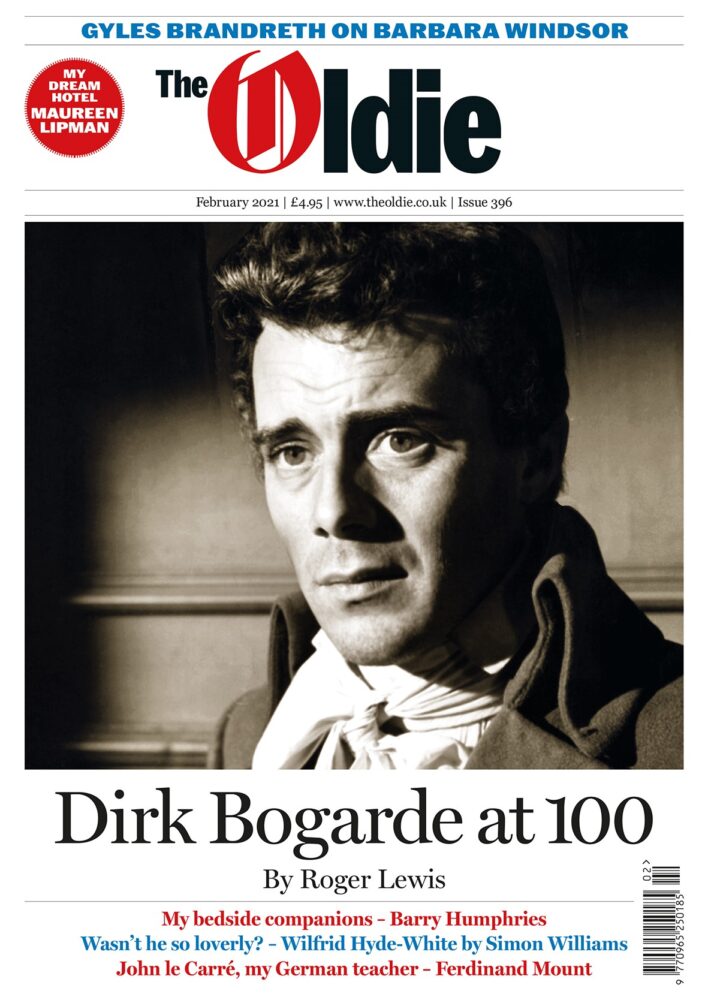
Roger Lewis celebrates the centenary of a sad, dark actor who matured into a happy writer.

I al­ways liked Dirk Bog­a­rde’s ear­lier Pinewood per­for­mances. Par­tic­u­larly when he was Si­mon Spar­row in the Doc­tor films (‘What’s the bleed­ing time?’ – ‘Ten past ten, sir’; ‘Big breaths’ – ‘Yeth, and I’m only thix­teen’).

The other med­i­cal stu­dents, Don­ald Sin­den and Ken­neth More among them, hare about, de­liv­er­ing their lines at a breezy clip, but Bog­a­rde un­der­plays – he is al­most brood­ing, cer­tainly prig­gish.

The role was an ‘ab­so­lute turn­ing point’, he agreed later, ‘which se­cured me in my pro­fes­sion.’ By 1955, Bog­a­rde was billed as the Idol of the Odeons. Cin­ema man­agers voted him ‘the World’s Great­est Money-draw­ing Star’.

Nev­er­the­less, his dark sul­len­ness quickly edged into man­ner­ism and camp. He was the first to ad­mit this. Catch­ing a clip of The Singer Not the Song at a BAFTA trib­ute, he was as­ton­ished to see ‘a very poovy per­son in black leather mak­ing eyes at John Mills’.

Bog­a­rde was al­ways or­nate. One is very aware of him as an ac­tor – his lus­trous dark hair, pos­ture and flut­ter­ing hands. He never trou­bled to con­ceal his van­i­ties. There is a stagey em­pha­sis.

He liked to stand out – ex­pected def­er­ence; was histri­onic. Daphne du Mau­rier, for in­stance, was ap­palled at the way Bog­a­rde por­trayed her hus­band, Gen­eral Brown­ing, as ‘a poofy waiter’ in A Bridge Too Far.

Yet, along­side the ex­ces­sive and ar­ti­fi­cial per­for­mances ( Ill Met By Moon­light, Song Without End, Mod­esty Blaise), Bog­a­rde could be im­mensely de­tailed, sub­tle, emo­tion­ally true, con­vey­ing what David Warner, who co-starred with him in Prov­i­dence, called ‘an ice-thin ve­neer of un­hap­pi­ness’.

Af­ter The Ser­vant, Ac­ci­dent and Dar­ling, how­ever, Bog­a­rde was en­cour­aged to take him­self rather too se­ri­ously.

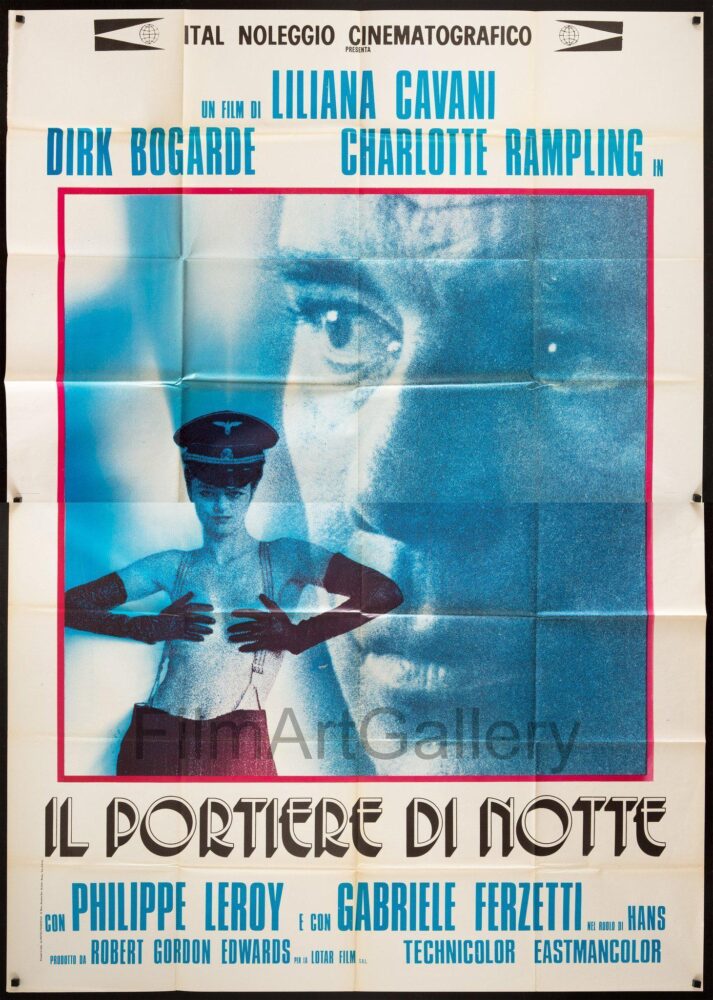
Poster for the Night Porter (1974)

The screen­plays of Harold Pin­ter, in par­tic­u­lar, brought out a re­sent­ment and mal­ice in his char­ac­ter­i­sa­tions that never went away. The min­gled joy of Bog­a­rde’s many vol­umes of au­to­bi­og­ra­phy and let­ters is that we see how, be­hind the brit­tle, over-ur­bane façade he cre­ated for him­self on screen, Bog­a­rde was a spoilt lit­tle uber-bitch in real life also, prickly and im­pa­tient and not un­like his own de­scrip­tion of film critic Alexan­der Walker as ‘a stupid old fag­got’.

He was born a cen­tury ago, on 28th March 1921, as plain Derek Jules Gas­pard Ul­ric Niven van den Bo­gaerde, the fam­ily al­legedly de­scend­ing from Anne of Cleves. His father was a Fleet Street art editor and, af­ter a brief pe­riod in Sus­sex, the fu­ture ac­tor was sent to be ed­u­cated in Glas­gow, where he lodged with im­pov­er­ished (ma­ter­nal) rel­a­tives.

‘Guests were fed cold Heinz Spaghetti on a silver salver & gossiped about mercilessly’

There was a stint at drawing schools in London, where he painted the scenery for student shows. Bogarde’s debut was as an extra in a George Formby film, Come On, George, in 1939. Life thus far had taught him that ‘being happy and obliging and fond of everyone was a sign of weakness’.

‘Rank wants me for something,’ he told his sister in 1945, but he was never to be jubilant about his career. ‘I DETEST the work, I detest the job, and most of the time I detest the people,’ he remarked sweepingly of the commercial cinema, which he felt for some reason was far beneath him.

Bogarde dreaded the thought of becoming like Richard Burton, who has ‘the charm of a dead baby’, or Alan Bates (Alice, as Bogarde called him), whom he deemed ‘as virile and sexual as a packet of Kleenex’.

He thought the problem could be solved by his leaving England in 1969 to find ‘more satisfying work’ in Europe, where he reported for duty with Luchino Visconti, Alain Resnais, and Rainer Werner Fassbinder.

Yet surely Bogarde’s notorious Von Aschenbach in Death in Venice isn’t a patch on his performance, a decade earlier, in Victim, with Dennis Price, which followed ‘the break-up of a man’s marriage and life owing to the fact he is flawed by homosexual tendencies’ (Bogarde’s own summary).

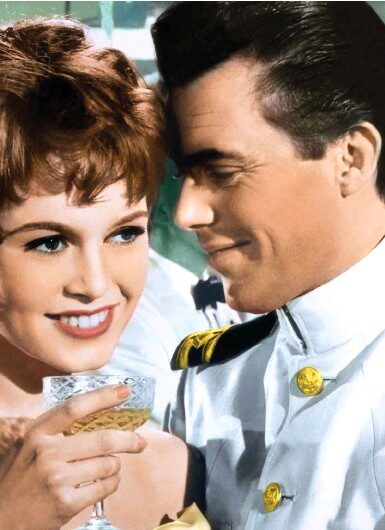
Doctor in love? Bogarde with Brigitte Bardot in Doctor at Sea (1955)

The Visconti classic, by contrast, is simply a lot of snuffling and wincing and staggering around the canals in a white suit. Bogarde flaps a napkin and sips at his soup to signify the suffering and fastidious artistic soul. I certainly prefer his Nazi in The Night Porter: as Bogarde puts it, ‘being straddled by beloved Miss Rampling with an entire Italian crew watching and eating pizza’.

After a spell in Rome, Bogarde and his boyfriend – or manager, as he insisted on pretending he was – Tony Forwood, who was Glynis John’s ex-husband, bought Le Haut Clermont, a farmhouse in Provence, situated on a hill amongst olive groves.

His memoirs tell us much about the restoration and maintenance of this idyllic spot – the haymaking, weeding, watering and raking. Their neighbours, the Attenboroughs, made such a noise squealing in their pool that Bogarde planted a forest of bamboo as a boundary.

Guests, who were fed cold Heinz Spaghetti on a silver salver, and other luminaries were gossiped about mercilessly. Kenneth Tynan wore ‘some plastic python and shoe buckles large enough to frame a Velasquez’ and was mocked for his ‘pink-tinted, stuttering, wet-lipped face’.

Glenda Jackson was Glenda Sludge, ‘with feet like a goat-herd’. In fairness, Bogarde did later come to admire her no-nonsense attitude to life (‘bloody marvellous’), unlike Prince Charles (‘he’s really got awful little eyes’), the Queen Mother (‘NOT all chuckles and meringues’) and the Duke of Edinburgh (‘Christ. He’s as jolly as an open coffin’). Even I turned up as prey. ‘Poor Larry O’ – a reference to my Olivier biography.

As the film roles began to dry up and all he was offered were parts as elderly sex perverts and schoolmasters, and scripts already rejected by Alec Guinness and John Gielgud, Bogarde turned himself into a bestselling author.

Yet it’s the many volumes of autobiography that were shot through with fiction.

Bogarde was far from being a reliable narrator of his own life. As John Coldstream, his biographer, says, after quoting a typical bit of boasting about wartime heroics, ‘Dirk never fought in the jungles of Japanese-occupied territory. He consistently romanticised his military career and used others’ experiences as his own.’

His knowledge of Belsen, for example, came from newsreels and ‘what was conjured in that ever-active imagination’. Bogarde’s actual military career amounted to his guarding an empty hotel on the front at Worthing.

Despite the lies and evasions (Bogarde had an old-fashioned fear of being exposed as a homosexual – Forwood is patronisingly portrayed in the books as a kind of offstage batman or jobbing gardener), his stuff shot up the bestseller charts.

He much enjoyed the trips back to the Connaught for the launch parties and the book-signing tours. Thousands of old ladies whom he imagined kept ‘beech leaves and bluebells in a copper jug’ sent fan letters on Basildon Bond.

In 1987, however, Forwood was diagnosed with cancer and, as Bogarde said of the French retreat, ‘We can’t hang on here much longer.’

Bogarde sold the house and his possessions, burnt his papers,

The Servant with James Fox

arranged for the dog to be put down, and ended up in a succession of flats in Kensington and Chelsea, finally coming to roost in ‘a small cabin stuck on top of an Edwardian mansion’ in Cadogan Gardens. He then had a stroke – and soon afterwards Forwood died.

‘The pain is starting right in now,’ he allowed himself to concede. ‘For love it was … is.’

He was never fully candid about this relationship, however, and remained at variance with himself. Helena Bonham Carter, who worked with him in 1988, said of Bogarde, ‘He would always make out he was a macho heterosexual. He was really a hunk of self-denial.’

Barbara Murray recalled, ‘He kissed me on the cheek and pissed off.’ Elaine Stritch was warned, somewhat unnecessarily, ‘I don’t want any knocking on my door at 3am.’ During the war, Bogarde seemingly had girlfriends but, as a contemporary remarked, ‘We never saw them kissing or anything like that.’

Women were always ‘a sort of camouflage’ – and what’s notable even about the jaunty Doctor films is the way Simon Sparrow, in scene after scene, fends off girls, from Joan Sims, munching an apple, to Brigitte Bardot, nude in the shower.

‘Women were always “a sort of camouflage” … in scene after scene he fends them off’

When Sue Lawley, after a tetchy Desert Island Discs encounter, concluded, ‘He seemed resentful. The world had done him wrong,’ the chief cause of the overriding sourness was his sexual nature – perhaps anyone’s sexual nature. Barbara Murray was shocked at how ‘he’d talk about the sexual act between a woman and a man with real distaste’.

Bogarde would not thank anyone for making the comparison, but his fastidiousness and disdain, his bitterness, misogyny and essential loneliness put me in mind of Kenneth Williams, who also wrote lots of catty letters, who preferred keeping a distance from everyone, who was never temperamentally content – and who had his detractors as well as fans.

‘There was vi­tu­per­a­tion on his face … I re­ally thought he was a hor­ri­ble crea­ture,’ said Michael York’s wife, Pat, when she first met Bog­a­rde, who was per­haps pun­ish­ing her be­cause he’d had a crush on her hus­band when they’d made Ac­ci­dent, with Pin­ter and Joseph Losey. Against the odds, though, in his final few years, as he adjusted to living alone, Bogarde, knighted by John Major, revealed or discovered a humility that had up till then seemed lacking. Though he said he found the English ‘petty-minded, mean, spiteful, arrogant, fearful and terrified of anything foreign or unusual’, he was suddenly remarkably free of these traits himself.

Publicity portrait for Modesty Blaise

The first volume of his autobiography (1977)

De­spite claim­ing, ‘I hate so­cial life now,’ he didn’t mind meet­ing film his­to­ri­ans, as ‘I am about the only liv­ing relic who re­mem­bers Joseph Losey, Ge­orge Cukor, Luchino Vis­conti, and now Fass­binder.’

He at­tended lit­er­ary lun­cheons, recorded talk­ing books for the blind, gave talks to schools about his (du­bi­ous) first-hand knowl­edge of the Holo­caust, and held act­ing mas­ter classes with stu­dents at the Old Vic and Guild­hall (‘None of them has a hope in hell’).

Taxi drivers made a fuss of him and geri­atric fans fol­lowed him around Tesco: ‘He’s buy­ing tinned toma­toes!’

Bog­a­rde died in May 1999, aged 78, grate­fully re­mem­ber­ing the lux­u­ri­ous times he’d had aboard transat­lantic lin­ers, the ser­vants in Hol­ly­wood with white gloves and sil­ver plat­ters, the lo­ca­tions in snowy Aus­tria, and the peo­ple he’d cher­ished, such as Judy Gar­land, Ava Gard­ner, Gra­ham Suther­land and Noël Coward.

‘A lost world. But aren’t you glad that we had it? … It was all a won­der, wasn’t it? … How for­tu­nate I was … Good­ness! How lucky I was.’

Readers Letters – March Issue 2021

SIR: Roger Lewis must have nodded off if he took from my biography of Dirk Bogarde (February issue) that the latter’s ‘actual military career amounted to his guarding an empty hotel on the front at Worthing.’ I allotted 57 pages to the five years Bogarde spent in the Army from 1941.

Admittedly Derek Van den Bogaerde, as he then was, never engaged in combat, but as an Intelligence Officer he was with Monty’s 2nd Army as it liberated Europe; then went on to India and finally to Java as ADC to Maj.-Gen. Douglas Hawthorn, commanding officer of 23rd Indian Division, while it tried to sort out the unholy mess that followed the surrender of the Japanese forces.

Mr Lewis is, however, quite justified in citing the conclusion I drew – from persuasive sources – that Bogarde had not seen at first hand the horrors of Bergen-Belsen. Given the prominence of the Holocaust in his later career as a writer, this mattered.

A few years after the book was published in 2004, I was contacted by a Canadian author who had discovered a piece of testimony suggesting that Bogarde had indeed ventured inside the gates of the camp, albeit only briefly and not on official duty, but, with two colleagues, out of curiosity. I duly revised my opinion in an article for the Bogarde estate’s elaborate website: www.dirkbogarde.co.uk. It was gratifying to do so in time for the centenary of a uniquely accomplished actor and writer whom I am proud to remember as a friend.

John Coldstream

London NW8

Dirk Bogarde and Belsen

On the 70th anniversary of the liberation of the concentration camp at Bergen-Belsen, Dirk Bogarde’s claim to have seen that ‘hell on earth’ at first hand is reassessed by his official biographer, John Coldstream

JC-belsen-db-in-eindhoven-c.19453030

‘I can remember the day very well, even after all these years,’ wrote Dirk Bogarde in The Daily Telegraph in 1988. ‘It was a clear, cold, April morning.’ The precise date in 1945 eluded him, however. He thought it was the 17th or the 18th, but could not be certain – ‘one seldom was in the war.’ Someone in the unit to which he was attached as an intelligence officer had said that the Germans had abandoned a large concentration camp, ‘and we ought to “swan off” and have a look.’

Bogarde had little more in mind than that he might find a pair of service-issue boots, which were made better in Germany. ‘I don’t know what I expected to see. I had known for some time that the camps existed – we saw them on our aerial photographs often enough – but it didn’t really occur to me that through the greening larches and under a clear, hard, blue sky, the last traces of the snow melting in the woods, I would be entering a hell which I should never forget and about which, for many years, I would be unable to speak.’ That hell on earth was Bergen-Belsen – a name which, 70 years after the camp’s occupation by Allied troops, resonates as powerfully as ever as a symbol of infamy.

Despite his reticence – an attitude shared by many – Bogarde in his later years was occasionally prevailed upon to talk about what he had seen. ‘Sometimes, perhaps if I’d had a drop too much, I might try to explain and usually ended in unmanly tears.’ This was certainly the case in a celebrated 1986 interview for Yorkshire Television with the late Russell Harty. There was no disguising his feelings, either, when he addressed the pupils at two private schools in the 1990s. Sir Anthony Seldon, who retires this summer as Master of Wellington College, was head of history and general studies at Tonbridge in 1991 when he invited Bogarde to speak to the older boys on a topic of his choice: ‘The Story of My Life’, ‘How to Write’, or some such conventional fare. However, shortly before he fulfilled the engagement, Bogarde wrote a second review for the Telegraph of books about the Holocaust, and he agreed with Seldon that at least part of the time should be given over to the subject.

‘It was an astonishing talk,’ recalled Seldon; ‘one of those occasions in your life when you are aware that you are listening to something utterly extraordinary, the like of which you will not hear again. He spoke about enlisting in the Army, about his father in the First World War, and about how he happened to be in the area of Bergen-Belsen on that day, and what it was like to go in. It was an outpouring of liquid emotion. And afterwards he just clammed up, he didn’t want to speak to anybody, and went home.’

It was the most moving talk Seldon had ever heard. When he went to teach the boys afterwards, he found them ‘still shell-shocked’. Naturally, there had been no question of Bogarde accepting a fee. As he put it: ‘Talking to the young is fee enough.’

Dirk in Kings School, Headmaster Study, Rochester

He would tackle the subject twice more in front of a large audience. First, at a memorial meeting of the Board of Deputies of British Jews, to mark the anniversary of the uprising in the Warsaw Ghetto; and finally at King’s School in Rochester, warning its head of history, Edward Towne, that at Tonbridge ‘it had been a bit of a battering’ for the boys, who ‘had never even heard of the Holocaust!’ He was pleased to report that some ‘blubbing’ had been noticed among the younger Tonbridgians. ‘This is not as unkind as it sounds,’ he qualified; ‘it merely proved that somewhere a nerve had been touched.’ Mr Towne’s Roffensians – as the Rochester pupils are known – were just as harrowed, and never more so than when Bogarde offered them the shocking image of a Belsen inmate recognisable as a girl, ‘because she had breasts – but only just.’

That day in the countryside 68 kilometres from Hanover, Bogarde said, cost him any faith he might once have had. Of God there was no sign. ‘God was invented by man for those who lost faith in living. I believe in another force – the force that helps plants to grow.’

❖ ❖ ❖ ❖ ❖ ❖

Not long after I began my research for Dirk Bogarde’s official biography I had to face the prospect that he might not have been to Belsen at all. One or two people who knew him well had raised a quizzical eyebrow at his reminiscence. At its crudest level, I found myself asking why would he? Surely, the camp and the area around it must have been declared out of bounds to all but essential personnel; after all, Typhus was rife. Bogarde’s job while on active service was, as an intelligence officer with 2nd Army, to interpret photographs taken by 39 Reconnaissance Wing of the Royal Canadian Air Force. A considerable task it was, too, even at that late stage in the war: the total number of pictures processed in April 1945 by No 5 Mobile Field Photographic Section – one of two such teams operating with the Canadians – was a staggering 348,306.

JC-belsen-28170P0552728

Second, the brief accounts that he gave in four of his seven volumes of autobiography and in private correspondence seemed, at best, confused, if not contradictory – not only about the date, but also about the extent of his visit to the camp and about what he saw there. They stood in marked contrast to the mood apparent from a card that he sent on 21 April to his sister Elizabeth, in which he reported: ‘We have been having the most beautiful weather here – I’ve actually been sunbathing, and got quite brown.’ Even given the necessity for censorship and self-censorship in any communication, it is surprising, to say the least, that he gave not even a hint of having seen with his own eyes why this war was justified. After all, three months earlier he had written on the reverse of a picture postcard from the Waal at Nijmegen: ‘I thought you would be interested to have a look at this! Its [sic] going to be one of the most famous bridges in history.’

Bogarde was a fine teller of stories. His six novels are evidence enough of that. So too are his memoirs. The record he compiled of his personal life and of how he secured a unique place in the world of the arts, with his 15 books and more than 60 films as a ‘name above the title’, is a fascinating, often brilliant, exercise in literary embroidery by a born writer; a highly-coloured tapestry, which amply proves the axiom that all autobiography is merely a version of a life.

There is no doubt that as 39 Wing moved north from Holland, through Belgium and into Lower Saxony that its members saw the shocking residue of atrocity. My concern, however, stemmed from the special circumstances at Belsen. I speculated that his recollection was a composite of what he had learned at second hand thanks to the unsparing newsreels and photographs shown immediately after the camp’s liberation; and of the images conjured in his ever-active imagination. Some of my interviewees said that received imagery was so vivid that soldiers serving in the vicinity became convinced that they had seen events for themselves. If Bogarde was experiencing what is now termed ‘false memory syndrome’, he had ample justification. For, as the writer Frederic Raphael told me: ‘Belsen stood for something much worse even than Belsen itself.’

In the 11 years since my biography’s publication no one who was with 2nd Army or 39 Wing in April 1945 has come forward to validate – or, for that matter, categorically to refute – Dirk Bogarde’s account of visiting Belsen. However, it is now possible to state with some authority that he did at least set foot inside the camp.

❖ ❖ ❖ ❖ ❖ ❖

On the morning of 13 April, following a local truce arranged between the German forces and the advancing 2nd Army, an agreement was signed for the surrender of Belsen to Allied forces. Two days later troops under the command of 8 Corps entered the first of the two areas that constituted the camp. It contained some 42,000 internees – men, women and children. Many thousands were mortally ill: in the previous month at least 17,000 had died. An estimated 10,000 Typhus-infected bodies lay around the camp, both inside and outside the huts, all of them requiring immediate burial.

In the second area, a former barracks housing about 18,000 men, mainly from Eastern Europe, there was gross overcrowding. Many of the occupants were ill. All clamoured for food and water. None the less, conditions were described as ‘palatial’ compared with those in Camp 1, where, according to a report compiled a fortnight later by 2nd Army’s Medical Services: ‘The general impression at first sight was of a seething mass of ragged sub-humanity aimlessly moving through the compounds in the final stages of starvation. A Demonic brain could scarcely have conceived such a tragic exhibition of complete degradation of the species.’

As the British forces took over the camp, 39 Wing was completing a move to Wunstorf, less than an hour’s drive away. Although the Army had declared from the outset that ‘as soon as operations permit the whole of the area will be placed out of bounds to all British troops except on essential duty’, controls were lax to begin with. For one thing, it was important to let the world know the truth. Hence the celebrated report by Richard Dimbleby for the BBC; hence, too, German Concentration Camps Factual Survey a film commissioned from Sidney Bernstein by the Ministry of Information, but later shelved for political reasons. (It has been restored and completed by the Imperial War Museum, and was screened at BFI Southbank from 16 to 29 April.)

JC-belsen-View-From-Tent-Normandy-19443636

It took at least a week before a proper exclusion zone was established. In that time, according to HQ 10 Garrison, who took control of the camp for 11 days from 18 April: ‘As usual with any matter of interest, floods of visitors descended on Belsen, mostly without authority or clear purpose.’ This certainly chimes with Bogarde’s account of the casual reasoning behind his own visit. Eventually, so many came that ‘they impeded work’. As with all Allied units in the surrounding area, the men of, and those attached to, 39 Wing had their curiosity piqued.

In the past few years a Canadian scholar, Mark Celinscak, has made a minute examination of the surrender and relief of the camp at Bergen-Belsen. His particular focus is on the responses of both the British and Canadian military personnel, whose achievement in practical ways was, he found, ‘remarkable’. His full account has earned him a doctorate from Toronto’s York University and will be published later this year as Distance from the Belsen Heap: Narratives of Liberation. Most relevant to the Bogarde story is Dr Celinscak’s discovery that it was easier to search for members of the Wing who had not made the journey to Belsen from Wunstorf and, later, from the even closer village of Reinsehlen. Early in May two RCAF padres gave a talk on the camp at the Wing’s temporary theatre, and members of the two MFPS units made ‘liberty runs’ on two successive days. In Dr Celinscak’s view it is, given the geography and the context, highly unlikely that Bogarde did not go there.

His opinion is supported by an extraordinary oral testimony given to the Imperial War Museum in 2007-09 by an Austrian, Andrey Kodin, who came to Britain in 1938, joined the Pioneer Corps in 1941 and by the spring of 1945, aged 22, was working with the Intelligence Corps in Germany. On 20 April he was sent to Belsen in order to help the British troops communicate with the inmates. He, unlike Bogarde, would never confuse the date: 20 April was the birthday – the 56th – of the Führer, ‘the monster’ whose policies had led to the indescribable scenes that confronted him.

JC-belsen-db-in-eindhoven-c.1945-22929

As Kodin stood beside his jeep, speechless with shock at the mounds of decomposing bodies nearby, another Army vehicle drove up and stopped a few yards away. Three British officers stepped out. His attention was drawn to one of them, standing with his hands on his hips and staring ahead with a look of acute sadness. The other two turned back towards their jeep, one calling: ‘Come on D—-, haven’t you had enough?’ Their comrade stood rooted to the spot. Eventually they persuaded him to join them, but, recalled Kodin, ‘he turned round and stood and looked again and I’ll never forget his face.’ It was the large, dark eyes in particular that haunted him.

About 10 years later, after leaving the Army, Kodin took his wife to the cinema. As the camera closed in on the face of its star, Kodin leapt to his feet and said: ‘That’s him! That’s him!’ His wife, who was Greek, had no idea what he was so exercised about, said he was mad and made him sit down. ‘Afterwards I told her about it and she wouldn’t believe it. She said, “Ah, you’re dreaming. You’re just imagining things”.’

Fast forward another three decades and Kodin was reading The Daily Telegraph. Once again he leapt to his feet, saying to his wife: ‘Here, Eva, you called me mad, remember? There’s the proof.’ For him the ‘proof’ was the review mentioned at the beginning of this article. The officer whose demeanour had so struck him on that fateful day in Lower Saxony was, he firmly believed, Dirk Bogarde. Yes, the fellow-officer had probably called out to Derek rather than Dirk – because 24-year-old Captain Van den Bogaerde of the Queen’s Royal Regiment had yet to assume his stage name – but Andrey Kodin may be excused a slight mis-remembering.

One month and one day after their wordless encounter, the last huts at Belsen were razed to the ground. The name will never be erased, however. As Leading Aircraft man Leo Velleman, later a renowned puppeteer, wrote in the August 1945 issue of FLAP, the magazine of 39 Reconnaissance Wing RCAF: ‘Belsen stands as a terrible warning to the people of the whole world . . . It will take unwearying vigilance and clear thinking to make sure that this does not happen again anywhere – ever.’ Dirk Bogarde was passionate in endorsing that sentiment. On this gravest of anniversaries it would be gratifying to think that his own credibility as a witness at first hand is secured.

March 28th 2015

May 1946 Batsford Gallery, North Audley Street, London. I am trying to locate WWII sketches by Capt. Derek van den Bogaerde (the actor, Dirk Bogarde) and F/Lt. Christopher Greaves (my late uncle) that they exhibited, with astute timing, in May 1945 at the Batsford Gallery, North Audley Street. Trained artists, the two were thrown together as photographic interpreters during the liberation of France, Belgium and Holland. When circumstances allowed they recorded what they saw in watercolour and pen and ink. Their exploits feature vividly in Bogarde’s autobiographical memoirs. I plan to write an article about this little-known joint exhibition, ideally in time for its 75th anniversary this year. The exhibition comprised 47 works whose titles relate to the war, sometimes to place of execution. I have access to two installation photographs and contemporary reviews in The Times and Apollo. A few examples belong to the artists’ descendants and Bogarde’s View from my Tent, July 1944, is in the British Museum. But most of the works, which sold well in 1945, are widely scattered. If any readers could throw light on any of their whereabouts, please contact me at thomsonbelinda8@gmail.com Yours, Belinda Thomson (Independent art historian)
When the Dark Side of the Mind Is Opened, Can It Ever Be Closed Again? A government scientist commits suicide while clutching a briefcase full of cash, and the police accuse him of being a Communist spy. But when his friend Dr. Henry Longman (Dirk Bogarde, Accident, Modesty Blaise) suspects that the death may have been the result of brainwashing, he decides to prove his theory by subjecting himself to sensory deprivation. Can the doctor resist the experiment’s sadistic side effects… or will he fall under the control of The Mind Benders? Mary Ure (Where Eagles Dare) and Wendy Craig (The Servant) co-star this classic 1963 sci-fi thriller directed by Basil Dearden (Dead of Night, The Man Who Haunted Himself) that went on to influence Ken Russell’s mind-bending Altered States. Written by James Kennaway (Tunes of Glory) and beautifully shot by Denys N. Coop (Billy Liar) with a rousing score by Georges Auric (The Wages of Fear).

Brand New 4K Master! Available at Amazon.

Special Features: -Audio Commentary by Film Historians Howard S. Berger and Nathaniel Thompson -Theatrical Trailer
Special Edition

The Mind Benders

Kino Lorber have revealed that they are preparing a Blu-ray release of Basil Dearden’s film The Mind Benders (1963), starring Dirk Bogarde, Mary Ure, John Clements, Michael Bryant, and Wendy Craig. The release is expected to arrive on the market later this year.

Synopsis: Following the death of a fellow scientist accused of being a communist spy, Dr. Henry Longman (Dirk Bogarde) works to prove that his colleague had been brainwashed. To do so, Longman subjects himself to experiments in a sensory deprivation tank. This starts to take a heavy toll on his mental health; in particular, it alienates him from his wife. Additionally, his scientific credibility suffers and with it the chances for discovering the truth about his colleague. Soundtrack by Georges Auric (The Wages of Fear). NEW 4K RESTORATION.

THE MIND BENDERSr-Kino Lorber Blu-ray in Fall 2019

21st Festival

21st Festival Nimes

A homage to Dirk Bogarde with the screening of four films selected by Nicolas Botti.
“Doctor in the House” 1954 – The film is relatively unknown in France and the film that made Bogarde a star. The French audiences perhaps more aware of his later career, which is not rich in comedies! Directed by Ralph Thomas, the director with whom he worked the most. The best movie they made together is probably “A Tale of Two Cities” but the “Doctor” series was key in his career.
“Victim” 1961 – This is undoubtedly one of Dirk Bogarde’s most important movies. It was quite a game-changer in British film history and Bogarde’s career. Directed by the brilliant Basil Dearden, one of the most unfairly and unsung directors in the UK. Victim dealt with the subject of blackmail and homosexuality. The film helped to change public attitudes and contributed towards the passing of the Sexual Offences Act, legalising sex ‘in private’ between consenting adults. An award winning performance by Bogarde which confirmed him as a serious actor
“Providence” 1977 – One of his “intellectual” movies, directed by Alain Renais, and shot in France with a sublime cast. Written by David Mercer.
“Daddy Nostalgia” 1990 – Technically it’s a french movie directed by Bertrand Tavernier (who has done a lot in France in recognition of British cinema). It is Bogarde’s last movie. A moving and rarely shown film, even in France.
Nicholas Botti 2018

Novelist whose Doctor in the House books were turned into popular comedy films, starring Dirk Bogarde as Simon Sparrow

Doctor in the House 2

Muriel Pavlow with Kenneth More, right, and Dirk Bogarde in Doctor in the House, 1954.

Dennis Barker Tuesday 15 August 2017

Gordon Ostlere, who has died aged 95, was a real-life doctor until 1952, when he left medical practice so that his alter ego, Richard Gordon, could pursue what he considered the more congenial occupation of writing. That year Doctor in the House, the first of Gordon’s breezily good-humoured series of stories with a medical setting, appeared, with a film adaptation following two years later.

The movie was a great success, making a star of Dirk Bogarde as Simon Sparrow, the hapless medical student with matinee idol good looks. He is the innocent who falls in with three already established students at St Swithin’s hospital (Kenneth More, Donald Sinden and Donald Houston), devoted to dating, drinking and sport. Authority came in the form of the fearsome chief surgeon, Sir Lancelot Spratt, realised with aplomb by James Robertson Justice. For Doctor at Sea (1955), Justice became the equally irascible captain of a cargo ship, and Bogarde as its medical officer was fortunate enough to have Brigitte Bardot on board as a passenger. Five more Doctor films followed, with Leslie Phillips starring in three of them as Dr Tony Burke.

Playing Simon Sparrow for BBC Radio’s Doctor in the House (1968) was Richard Briers, and the series has since resurfaced on Radio 4 Extra. Gordon’s cheerful refusal to be overawed by the world of healthcare was very much of its time, notably in its crass sexism – but it was also one component of a general postwar melting away of deference.

ITV revamped the format with versions of Doctor in the House (1969-70) and Doctor at Large (1971) starring Barry Evans, and with scriptwriters including Graeme Garden, Bill Oddie, Graham Chapman and John Cleese. Doctor in Charge (1972-73) and Doctor at Sea (1974) starred Robin Nedwell.

Gordon wrote much else, including a biographical novel, The Private Life of Florence Nightingale (1978), which suggested that the great pioneering nurse was a lesbian. If the aim was to create attention, he certainly succeeded. Some members of the medical and nursing professions were unimpressed, and the contretemps ended in Doctor-esque comedy when a press conference that Gordon had called at St Thomas’ hospital was cancelled by the indignant district nursing officer and the author had to hold it outside on the pavement.

Richard Gordon 2

Richard Gordon was a qualified doctor, but left his medical life to become a full-time writer in 1952. Photograph:Rex

In The Private Life of Jack the Ripper (1980), he came to the conclusion that the Victorian killer and mutilator of prostitutes was not only a doctor, because of the surgical skill he displayed, but also an anaesthetist – as he himself had been at the start of his career. His reasoning was that because no one had heard any of the victims screaming, the Ripper must have used chloroform, which would require specific medical knowledge.

Gordon loved to let his mind roam all around the discipline he had started from: in the 1990s, his Alarming History of Medicine contained “amusing anecdotes from Hippocrates to heart transplants”, and other Alarming Histories covered famous and difficult patients, and sex. He also edited The Literary Companion to Medicine (1993).

Born in London, Gordon studied at Selwyn College, Cambridge, and St Bartholomew’s hospital medical school in London. He was an anaesthetist at St Bartholomew’s and at the Nuffield department of anaesthetics in Oxford, and with Roger Bryce-Smith wrote a textbook on the subject.

After a stint as assistant editor of the British Medical Journal, he took a job as a ship’s doctor on a freighter bound for Australia. In the Indian Ocean he realised that the crew were almost entirely healthy and likely to remain so, and that the only things he could do were drink gin and whisky with the ship’s engineer or use the purser’s typewriter to start writing about his medical experiences. The latter seemed to promise a longer life, so he arranged all the anecdotes he could remember around Simon Sparrow, and Doctor in the House and its successors sold in their millions.

Doctir in the House Poster 2

The poster for the 1954 film Doctor in the House. Photograph: Rex

In 1951 he married Mary Patten, a fellow anaesthetist whom he had met in Oxford. She supported him during his change of career, and they moved to Bromley, in south-east London.

Though he certainly wrote for popular consumption, Gordon did not seek publicity for himself. However, in 1974 he unknowingly received the ultimate accolade of the world of entertainment – being lured into a situation where he could be invited to appear on This Is Your Life, hosted at the time by Eamonn Andrews. Guests had been secretly assembled for the live show, but when Andrews approached him with his big red book to tell him, “This is your life”, Gordon did not, as intended, graciously go to meet his assembled family and friends in front of the cameras.

Instead, he snapped, “Oh balls!” and stalked off. Screens suddenly went blank and another programme was substituted. The only other person to have jibbed up till then was the footballer Danny Blanchflower. Unlike him, Gordon relented after persuasion from his wife, returning a few minutes later to record a programme that was shown later. His initial reluctance he put down to being “pathologically shy”.

He is survived by Mary and their two sons and two daughters.

– Richard Gordon (Gordon Stanley Ostlere), doctor and writer, born 15 September 1921; died 11 August 2017

– Dennis Barker died in 2015

Basil Dearden’s gay-blackmail drama, which helped to change the law on homosexuality in the UK, is back in UK cinemas in a restored digital print. On its first release in 1961, Sight & Sound contributor Terence Kelly praised its groundbreaking candour and a first-class performance by Dirk Bogarde.

Terence Kelly 22 July 2017

victim-1961-004-00m-klv-dirk-bogarde-with-man-holding-letter

from the Autumn 1961 issue of Sight & Sound

Victim (1961)

In a time-honoured tradition, Victim uses the framework of a thriller – and rather a good one – to investigate a social problem. The only innovation is the problem itself: for the first time, a British picture concerns itself largely with the lives and problems of homosexuals. Understandably its plot deals with blackmail; and the film unequivocally condemns the way this is encouraged by the present state of the law. An elaborate blackmail racket is described, leading to the death of a young man, until a barrister friend of the dead youth hunts down the blackmailers and gives evidence against them, at the cost of probably wrecking his own career. His investigations allow for a tour of the more respectable parts of the London homosexual underworld, with glimpses of the ways in which different men cope with or are destroyed by their abnormality.

UK 1961
Certificate PG 96 mins approx
Director Basil Dearden
Cast
Melville Farr Dirk Bogarde
Laura Farr Sylvia Syms
Calloway Dennis Price
Phip Nigel Stock
UK re-release date 21 July 2017 (2K digital version)
Distributor Park Circus
parkcircus.com

► Trailer

At first the scriptwriters (Janet Green and John McCormick, writers also of Sapphire) conceal their theme in a melodramatic haze, though only the most innocent will fail to penetrate it. The cranes and scaffolding of a gigantic building site, the restless camera, Peter McEnery’s nervous performance, build a feeling of suspense which, unfortunately, the picture fails to regain later when it most needs it.
Further, it relies overmuch on the improbable or the dubious. Thus, who is going to blackmail a young clerk, even a wages clerk, when he has richer, if wilier, game like a barrister at his mercy? And is suicide quite so easy in a police cell?

victim-1961-002-dirk-bogarde-phone-00o-7pg

Victim (1961)

Almost as unlikely are two of the four shock revelations which punctuate the last half-hour, gaining their impact by borrowing from the conventions of the detective novel rather than the screen thriller. The other two coups de theatre, with their cleverly contrived anti-climaxes, provide a big share of the film’s somewhat sparse humour. Its more abundant wit is for the most part sardonic or self-pitying, as the ‘victims’ comment on their condition and its unrewarding perils. The dialogue is slick and to the point, leading smoothly if obviously into didactic passages in which the pros and cons of the law are argued. Most of the obvious pitfalls are neatly circumvented, though at the cost of giving every character an over-explicit attitude to ‘the problem’.
Basil Dearden’s journalistic method works well in these circumstances. With reservations about Sylvia Syms’ portrayal of a judge’s daughter, one can give his casting and control of actors high praise. Among the relatively unfamiliar players, one notes Peter McEnery, Donald Churchill, and particularly Derren Nesbitt, giving a striking presence to the blackmailers’ courier; of the older supporting actors, Hilton Edwards, Charles Lloyd Pack and Norman Bird impress in varying homosexual roles. Dirk Bogarde offers one of his best performances as the barrister, wavering between guilt and resolution. But with this character the script inevitably compromises: he is homosexual only by inclination, never by act. Yet even such equivocation is a big step towards candour, and casting a star in such a part demands courage.

victim-1961-003-sylvia-syms-dirk-bogarde-00m-wyw

Victim (1961)

The half-world through which the action moves is portrayed with deliberate tact: there is none of the actors’ camp talk or behaviour which would repel or bewilder most audiences; many an everyday British comedy contains far more risque jokes; physical relationships are never more than obliquely implied. In short, with the tragedies of death or ruined lives on one hand, and sadism and blackmail on the other, the emotional argument is heavily weighted.
It is easy to sneer that Aunt Edna will have no trouble in being high-mindedly tolerant here. But allowing for public opinion – even after the Wolfenden plea for tolerance, which is not mentioned here – and allowing for industry attitudes and for censorship, could Victim in fact have been more frank than it is? It is only fair to say that it could not. As far as those who made it are concerned, the challenge to their skill and integrity has, for the Britain of 1961, been successfully met. The tougher challenge will come when the case is put with less sympathetic characters in unflattering circumstances, and still presented convincingly.
'Victim' returns to cinemas 56 years after it's release.

The Daily Telegraph 21 July 2017 – ‘Victim’ returns to cinemas 56 years after it’s release. Tim Robey looks at its makers’ battle to get it past the censors